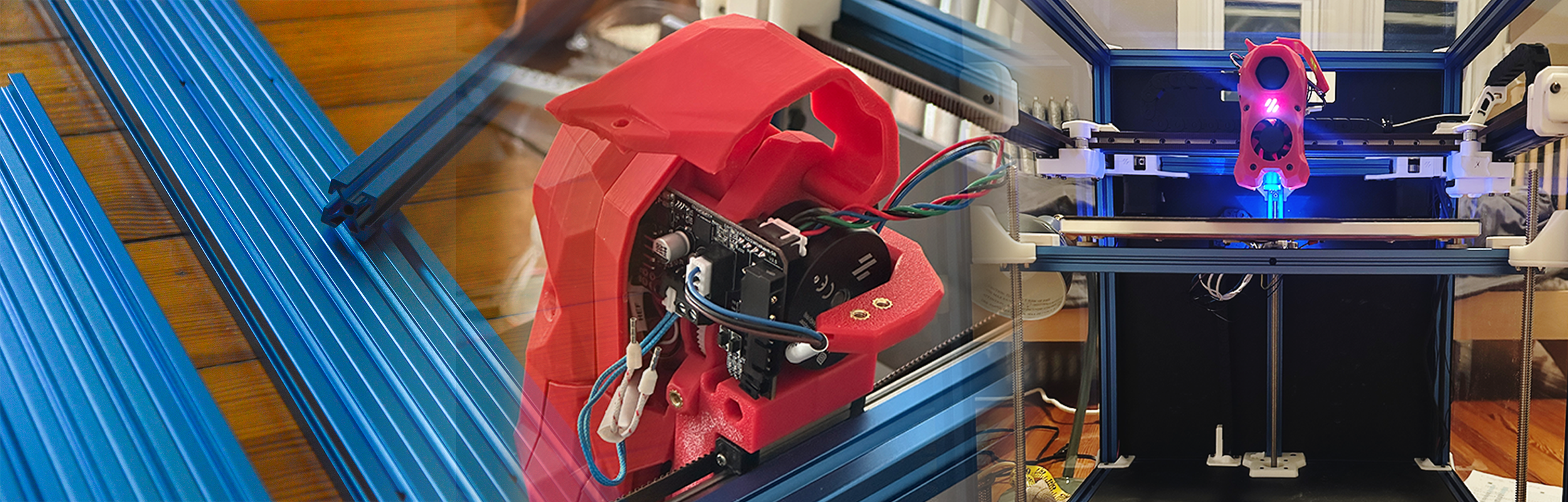
This is not a traditional design project, but a self-driven learning initiative motivated by my interest in mechatronics. Through the open-source community, I built a 3D printer from the ground up—developing an understanding of hardware components such as motor drivers and CoreXY belt systems, as well as software setup, including installing Linux and configuring control interfaces to fine-tune printer performance. The goal of this project was to build the engineering foundamentals needed to design complex, integrated systems like the printer itself.
Initial research focused on existing open-source 3D printers such as Voron and RatRig. I studied their documentation, watched tutorial videos, joined community Discord channels, and spoke with experienced builders to understand common workflows. I then chose to build a printer kit from LDO, a third-party vendor that sources the full BOM and improves certain aspects of the design, offering a smoother installation process for beginners.
Through this process, I identified a key problem: many open-source hardware projects assume prior knowledge in electronics and mechanical systems. It discourages newcomers before they fully begin. As I built the printer, this led me to question how the learning experience of open-source projects could be made more accessible?
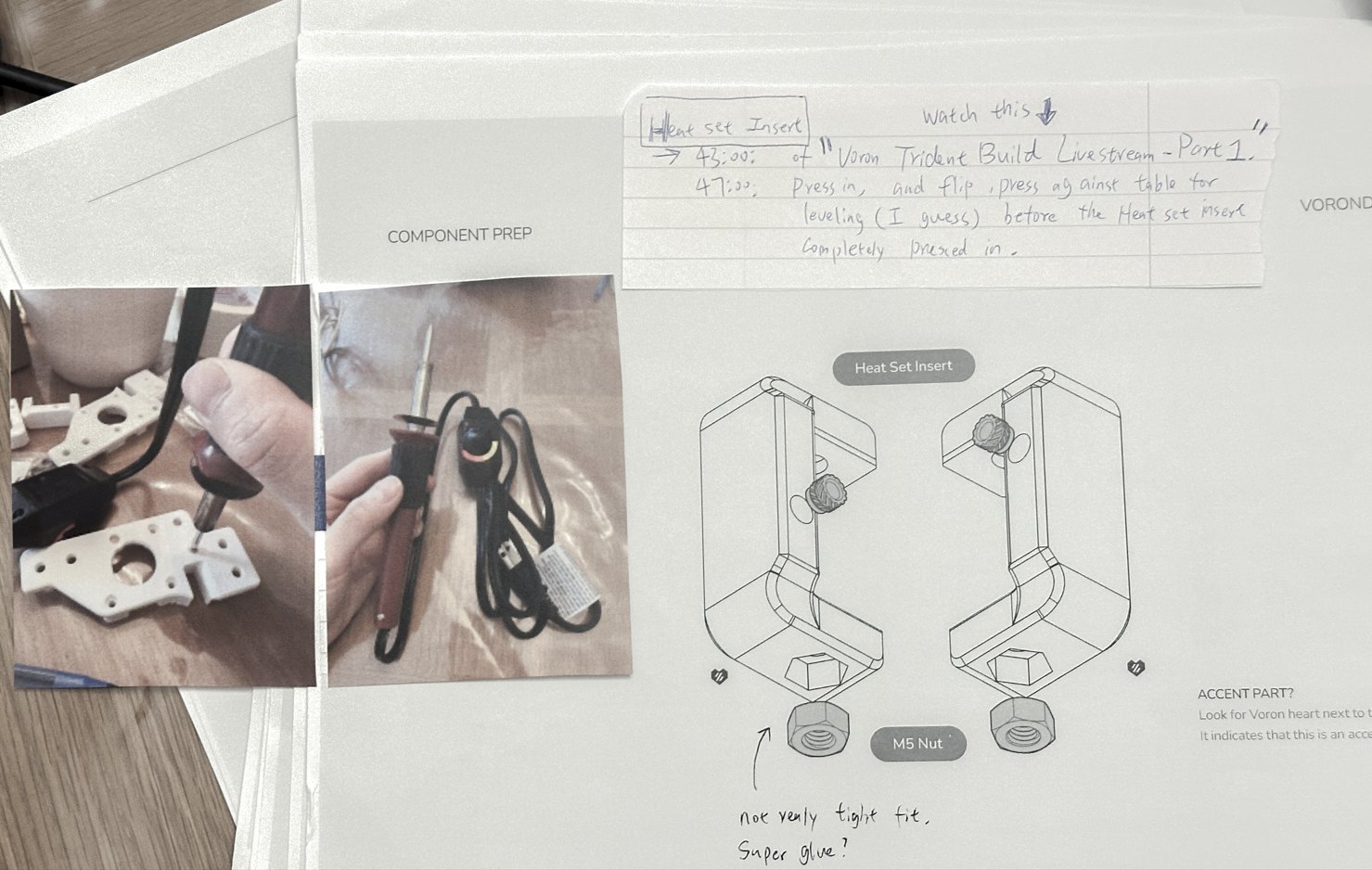
I actively annotated the build manual as I progressed through each step, noting where I got stuck to identify gaps in my understanding and the specific knowledge I needed to learn.
Many issues only surfaced during initial tuning—such as incorrect belt tension, wiring errors, or loose toolhead assembly—often requiring full disassembly and reassembly. This process demanded patience and persistence, reinforcing troubleshooting as a core part of the learning experience.
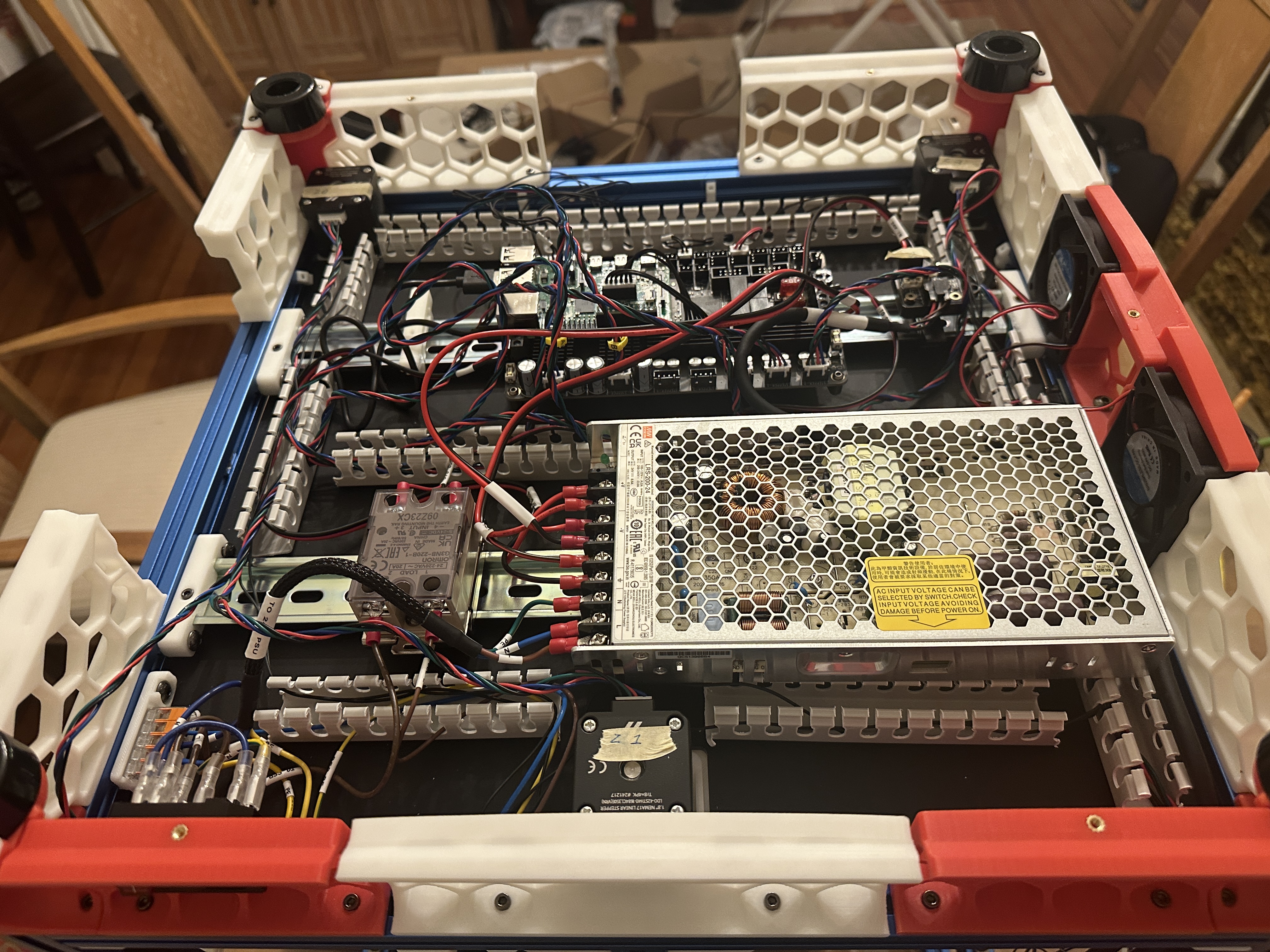
Learning Electronics: Gained hands-on understanding of how electronics integrate into hardware systems, including control board, stepper motor, Raspberry Pi, connectivity checking etc. and soldering for electrical connections.
Design for Additive Manufacturing: Developed practical knowledge of designing printed parts for assembly, using heat-set inserts, defining tolerances between hardware and plastic components, housing for electronics that balances the minimal spacing with aesthetics.
I successfully built a working 3D printer and completed its first print. While further tuning is still needed, the printer now serves as a functional platform for continued experimentation, allowing me to deepen my understanding of additive manufacturing techniques, material properties, and system-level behavior through hands-on iteration.
More importantly, this project reinforced my confidence and motivation to move further into engineering-led design. It demonstrated that I can independently acquire complex technical knowledge, adapt quickly, and continue growing regardless of the learning environment.
