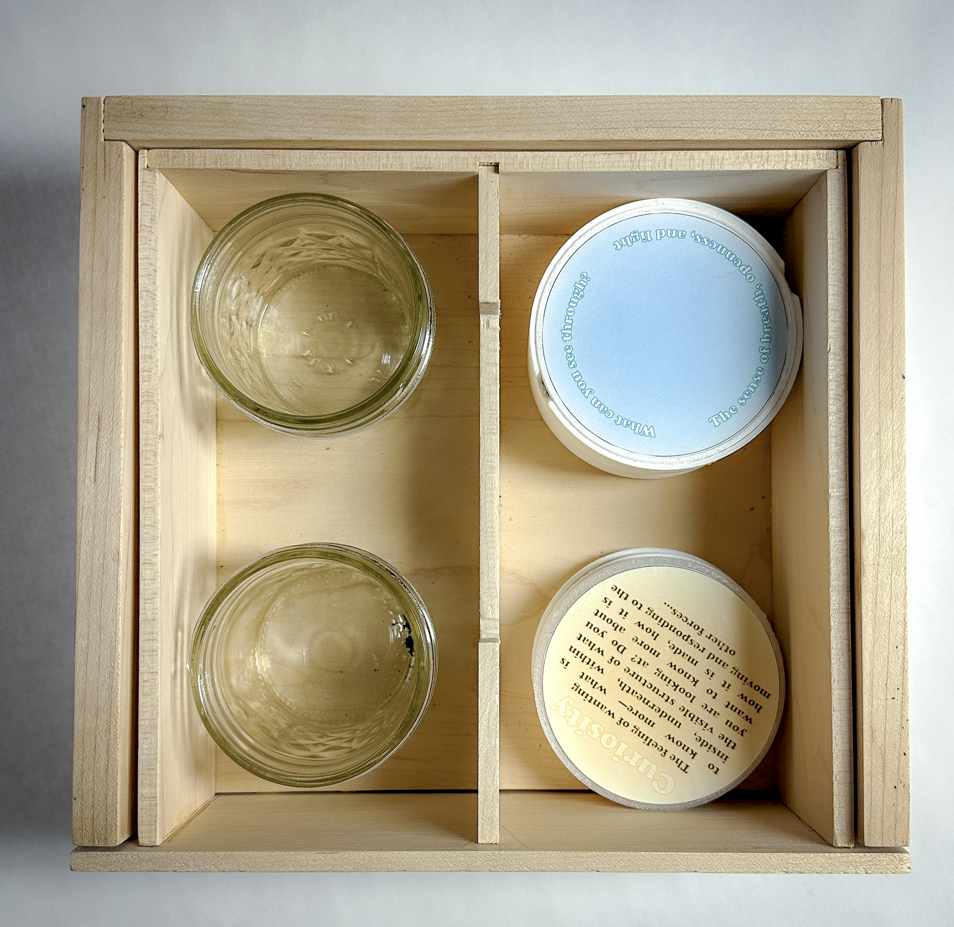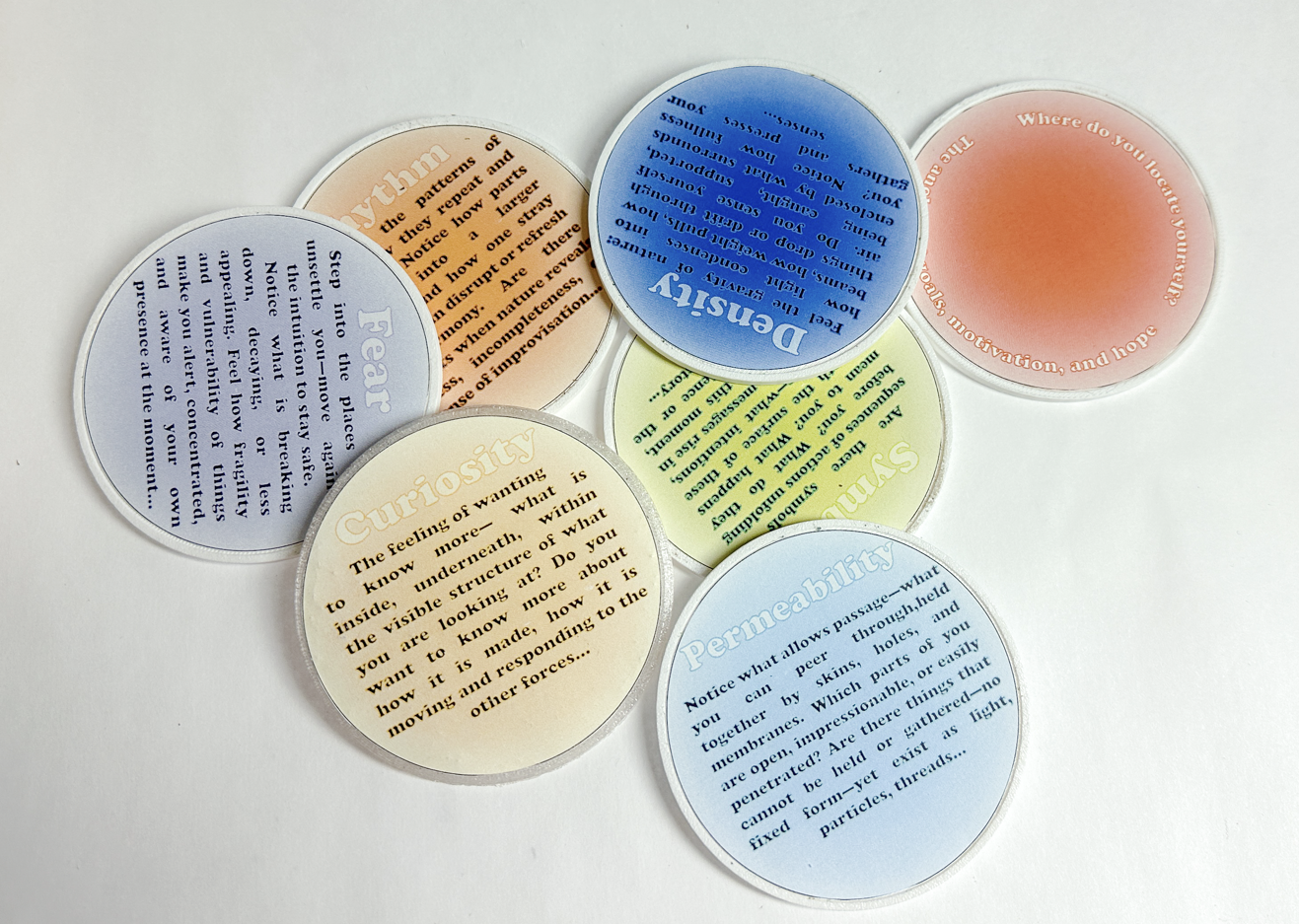
In the age of mechanical reproduction, Walter Benjamin reflected on how the authenticity of art diminishes when objects can be endlessly replicated. Today, in the age of digital reproduction, this loss of authenticity extends beyond art to everyday experience, as reality itself becomes mediated and flattened through screens and social media. This project explores how experience design—through physical artifacts and prompt-based workshops—can encourage people to step outside, reengage their senses, and reflect on how to rebuild a meaningful connection with the physical world.

Many people of my generation experience a persistent sense of disorientation—feeling empty, unheard, and disconnected from the world around them. This condition is closely tied to sensory deprivation caused by prolonged engagement with digital environments. Our physical interaction with the world is increasingly compressed into a small screen: hands repeat the same scrolling motion, attention is guided in one direction, and content is algorithmically calculated and psychologically optimized to capture and hold focus. As a result, perception becomes narrow, passive, and detached from embodied experience.
Through mapping possible futures shaped by AI, the digital age, and related social cultural trends, I ask whether—and how—humans might find their physical position in a wolrd shaped by multi-factor forces.
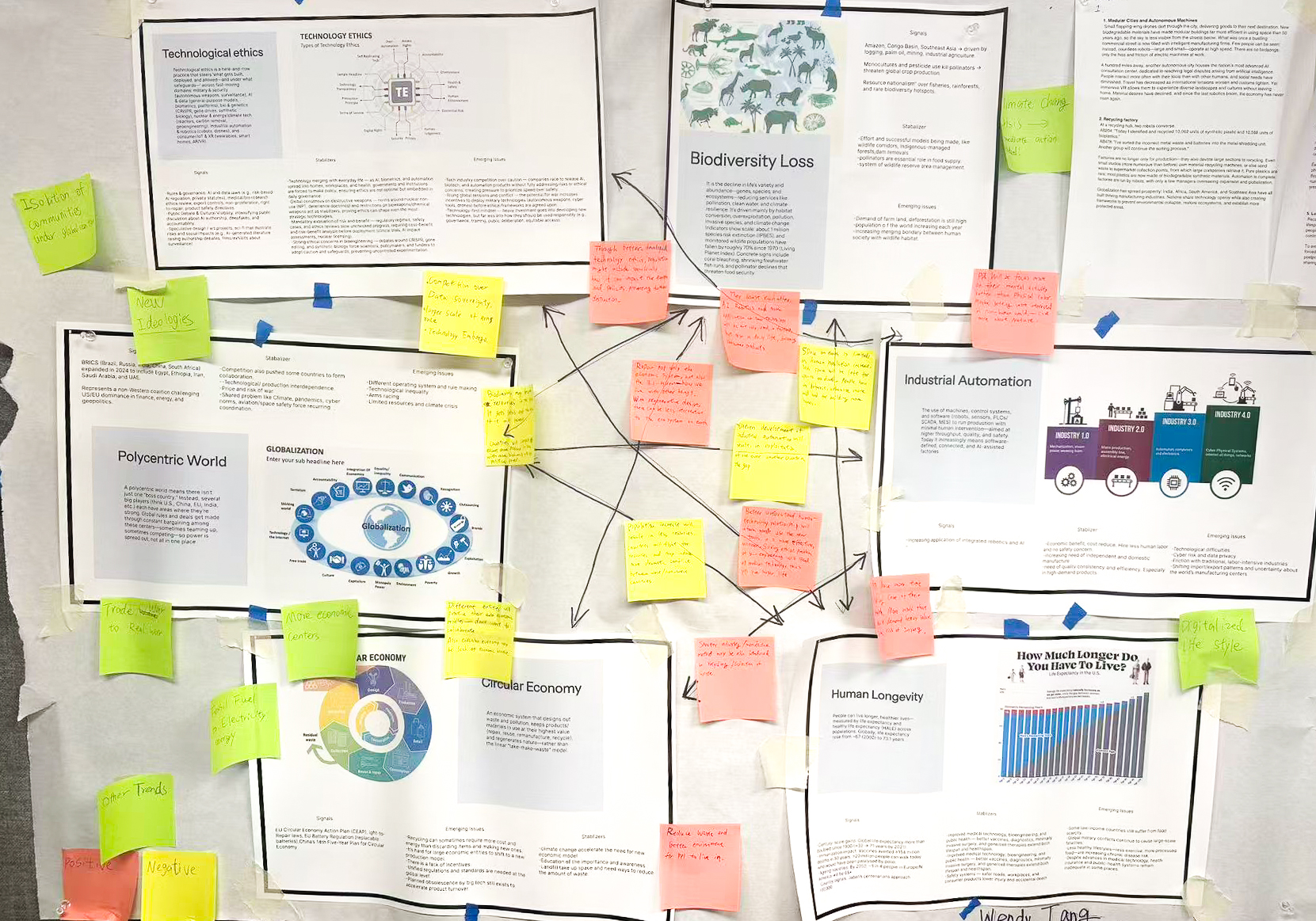
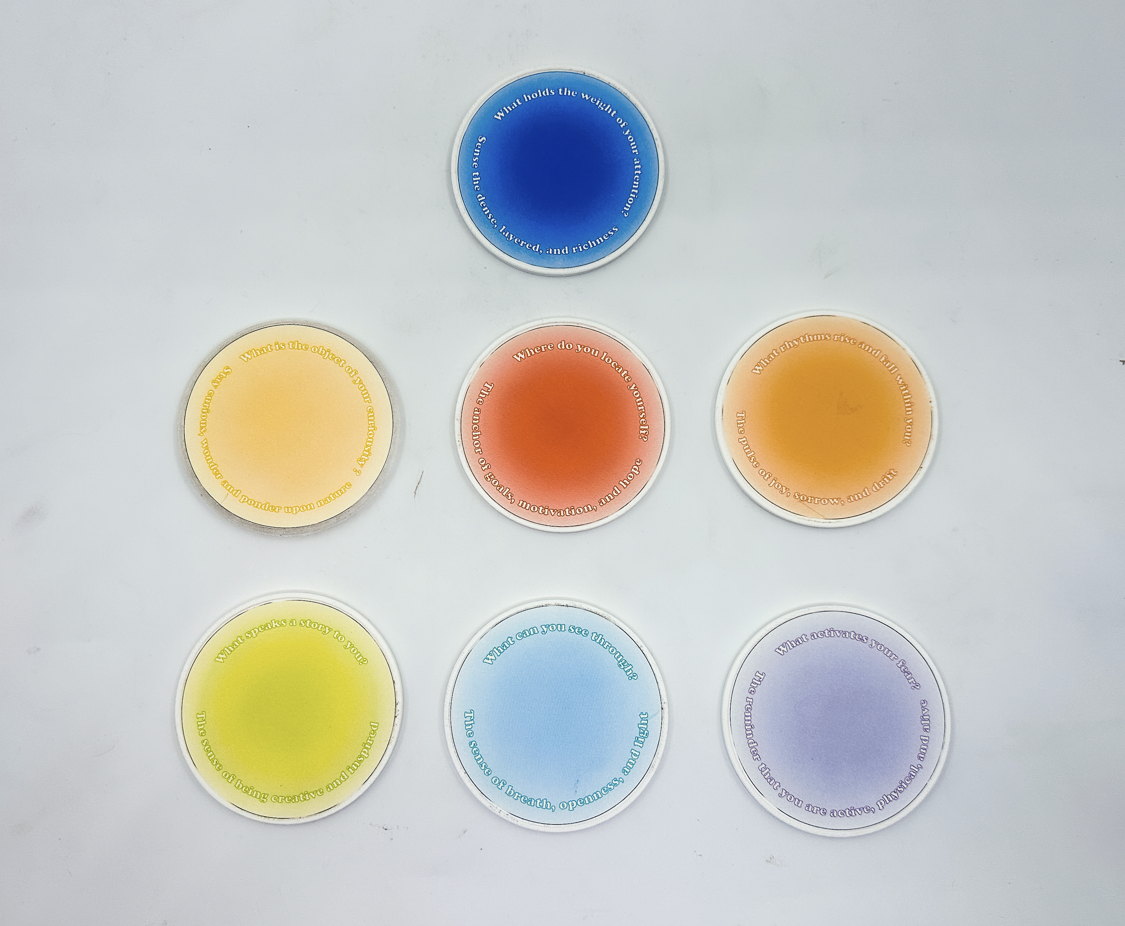
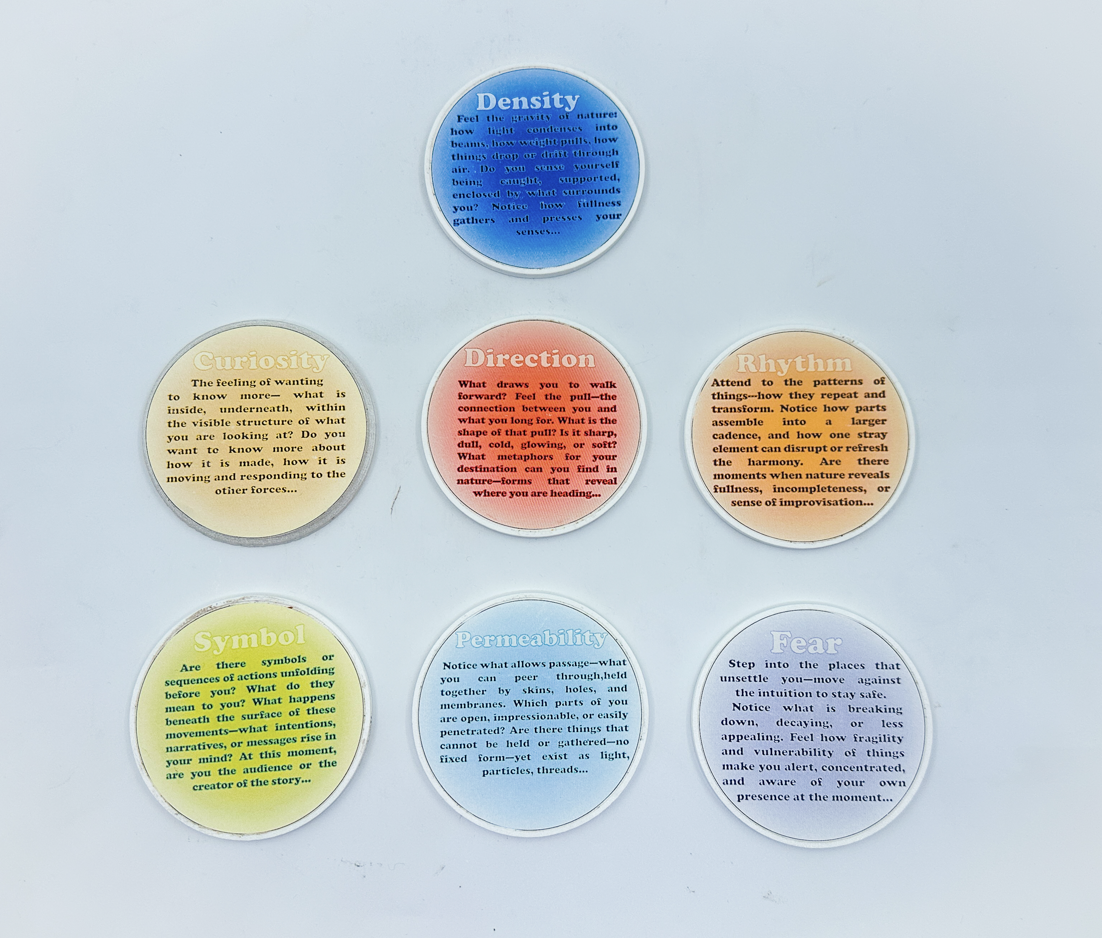
I pushed myself to ask what kind of product we need right now that does not yet exist—and how it could be designed to give users more agency. Rather than controlling or manipulating attention like phones, this product acts as a tool that reconnects people with their physical being throug senses in outdoor environment—touch, sight, smell, emotion, and imagination— by invitaion rathar than forcefull demand.
I believe physical objects from nature can help reconnect people with their physical beings. From being invited to step outside, expand their sensory awareness, collect objects and give them meaning, people can gradually build a personal connection with what they encounter.
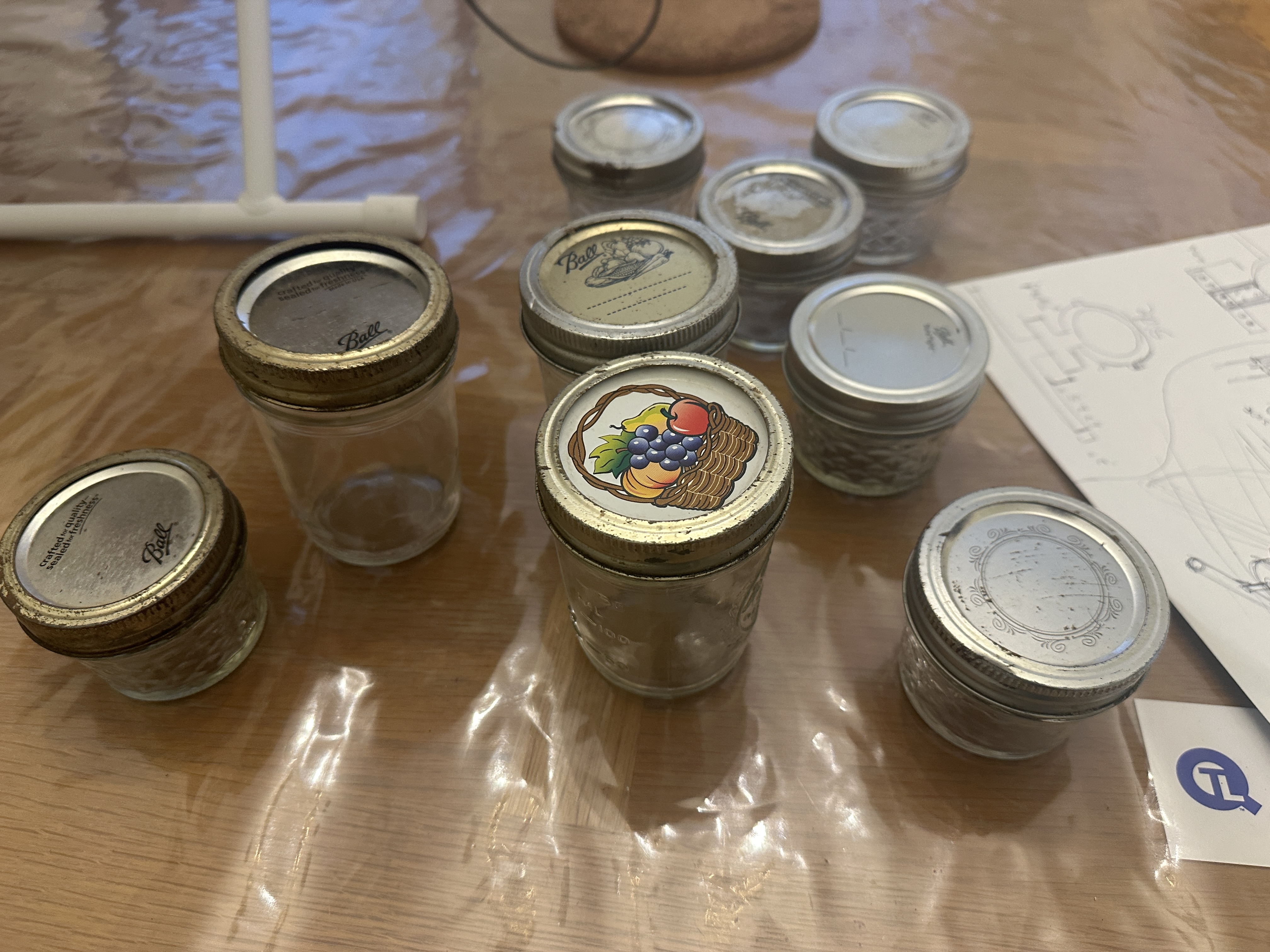
I found these mason jars and liked their design—they are the most accessible containers , and the sealing lid can be easily replaced.
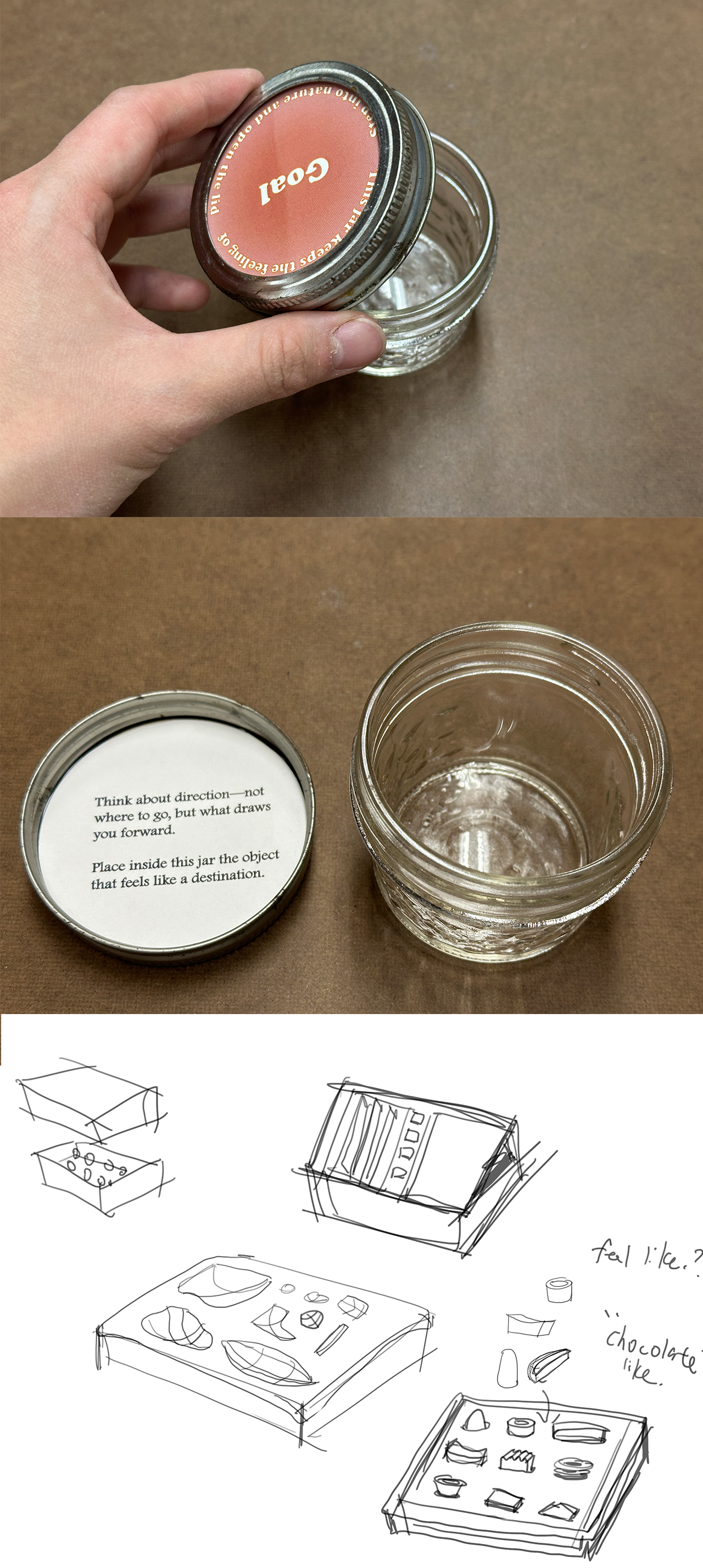
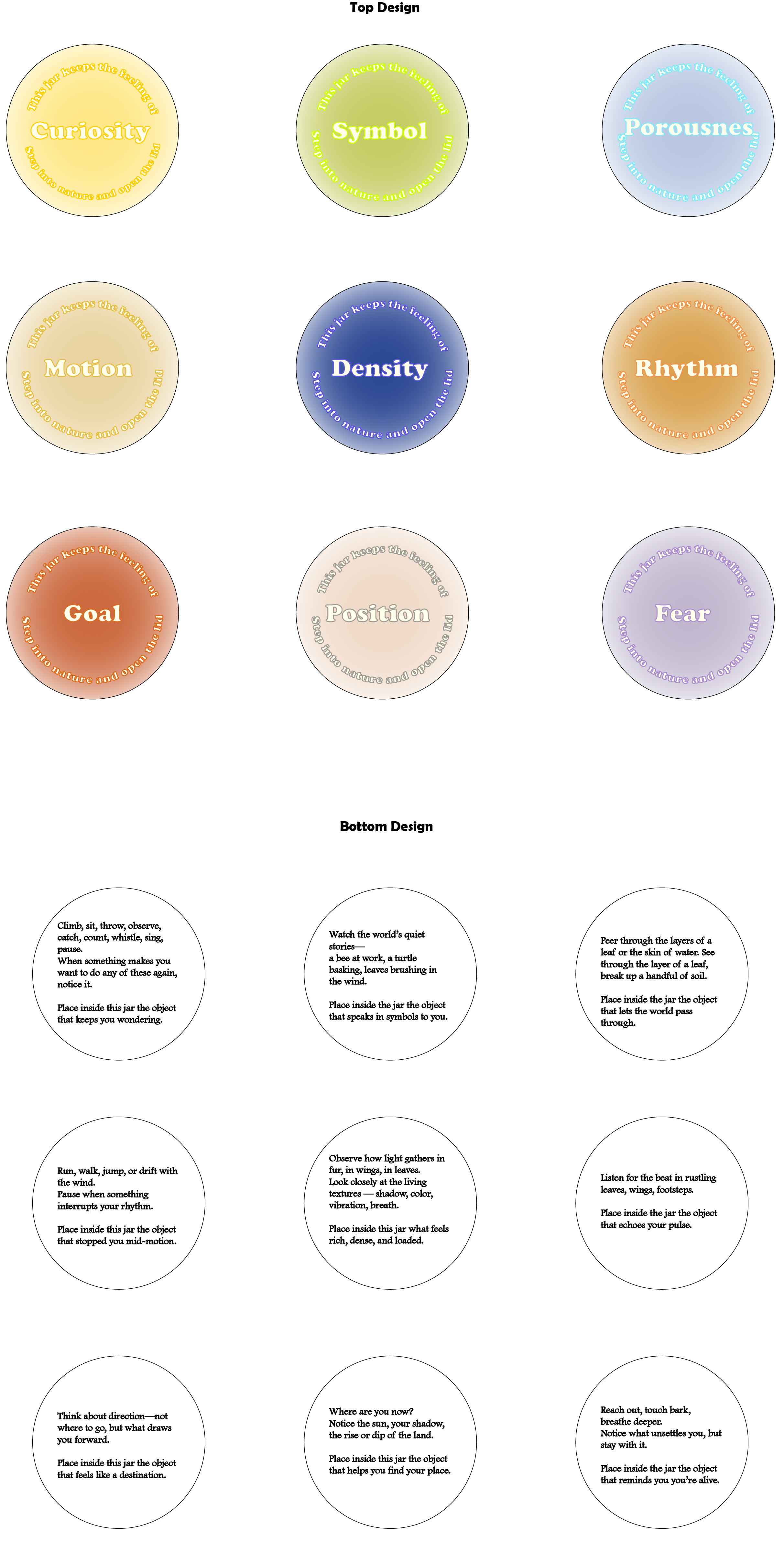
I recorded videos of volunteer participants using the prompt cards to collect objects and interact with their surroundings, then asked for their feedback.


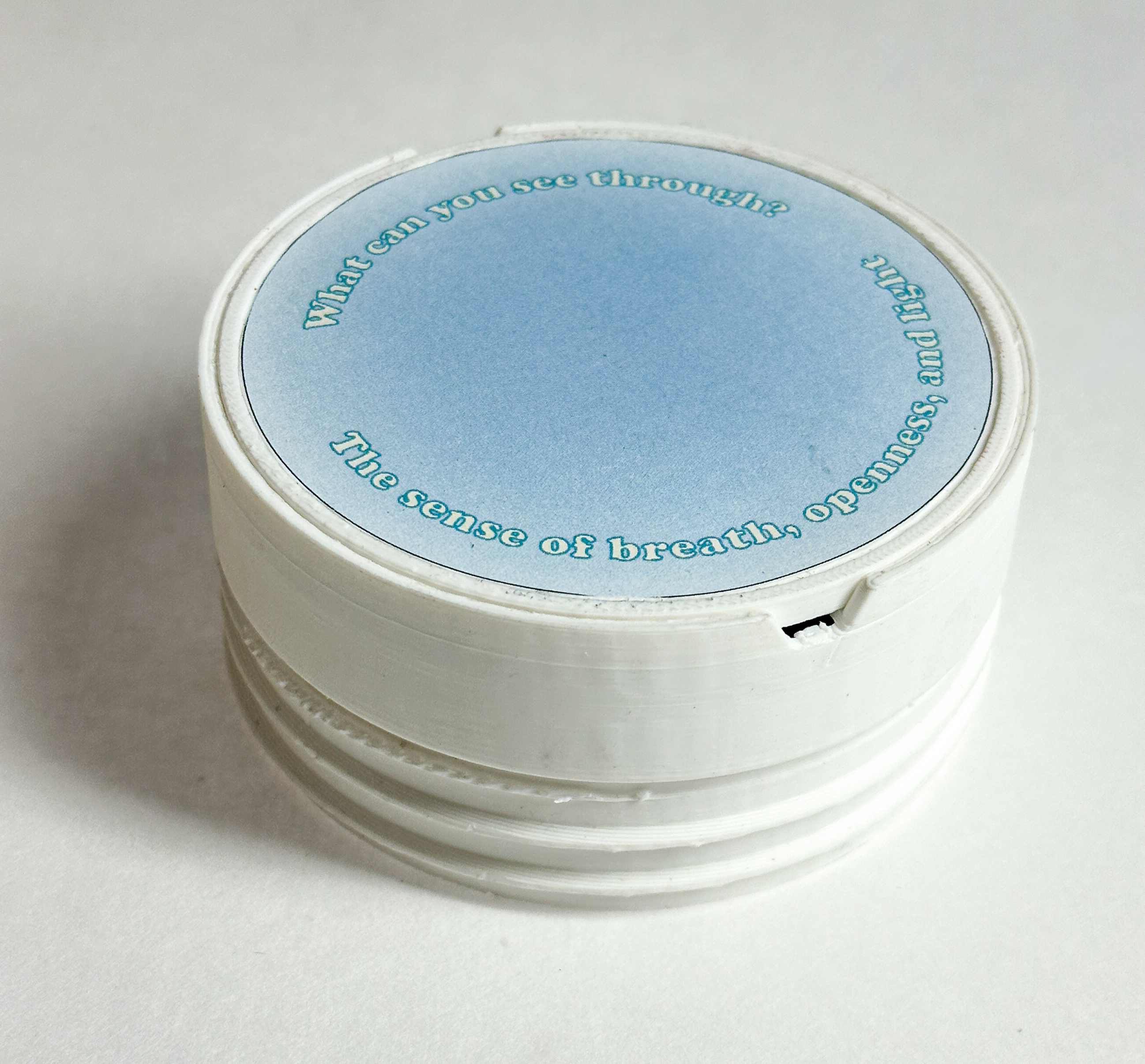
I refined the prompts to be clearer and allow more open-ended interaction, and added a voice-recording option so participants were not limited by the size or type of objects they could collect.

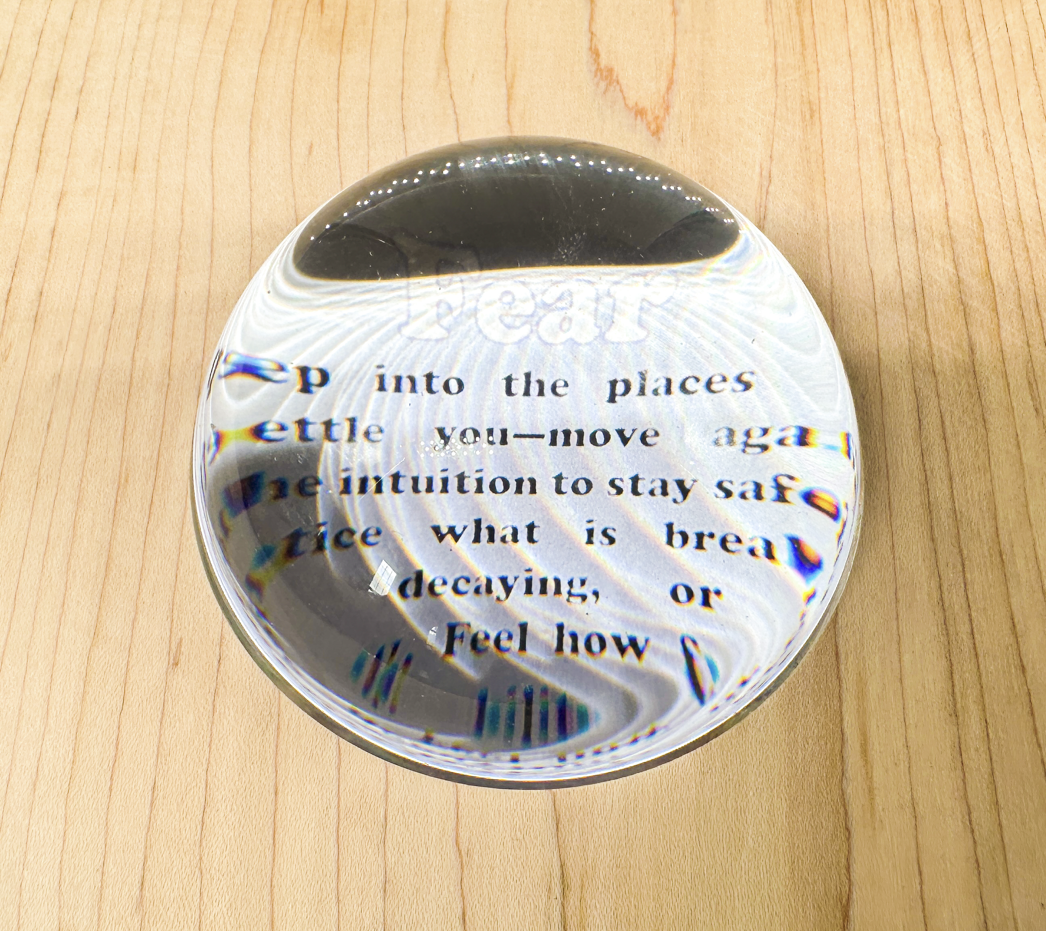
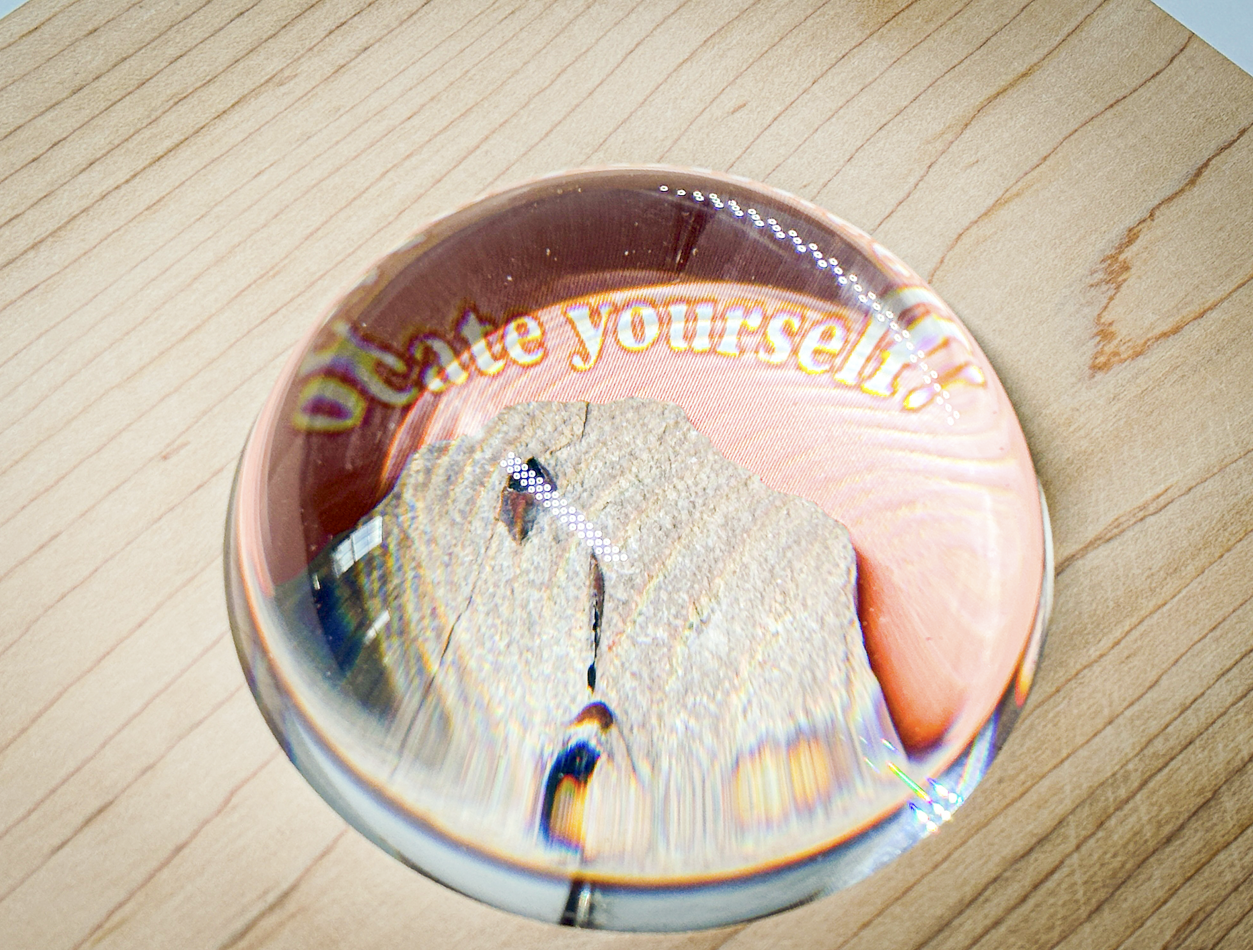
To complete the experience, I designed a way for users to bring their collected objects back into daily life. The objects are stored in a wooden collection box, allowing users to pause, reflect, and revisit their outdoor experience at home, in the studio, or at the office.The box includes a drawer for prompt cards and small natural objects, and a top lid with an embedded magnifier that lets users closely observe tiny details—slowing down attention and extending sensory engagement beyond the outdoor moment.

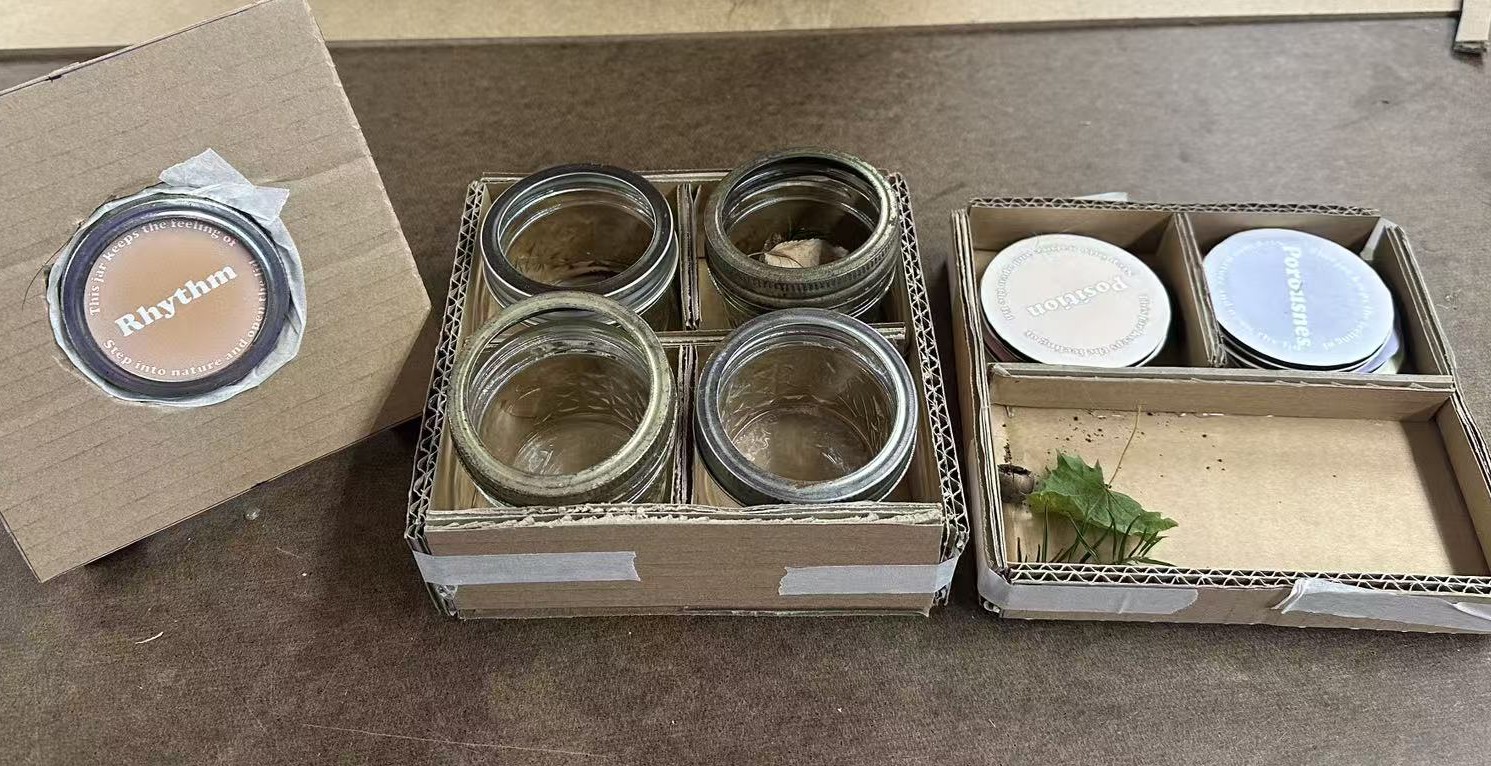
Quick prototype testing the composition of interior placement.
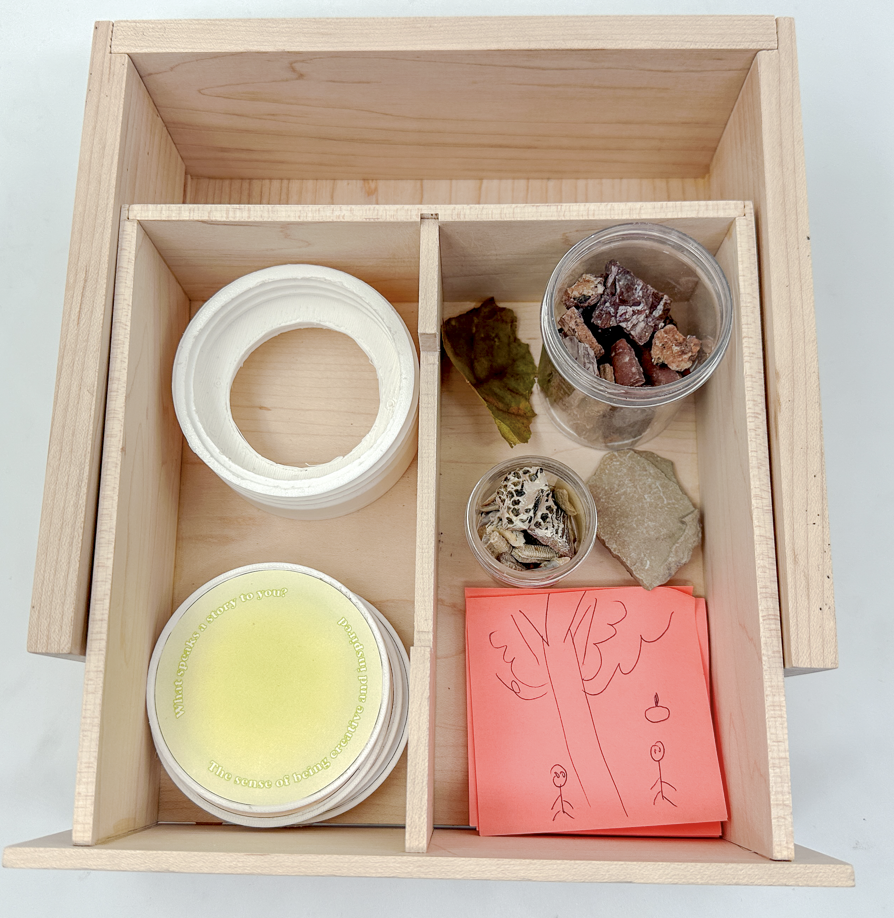
Finished wood container (without the lid on).