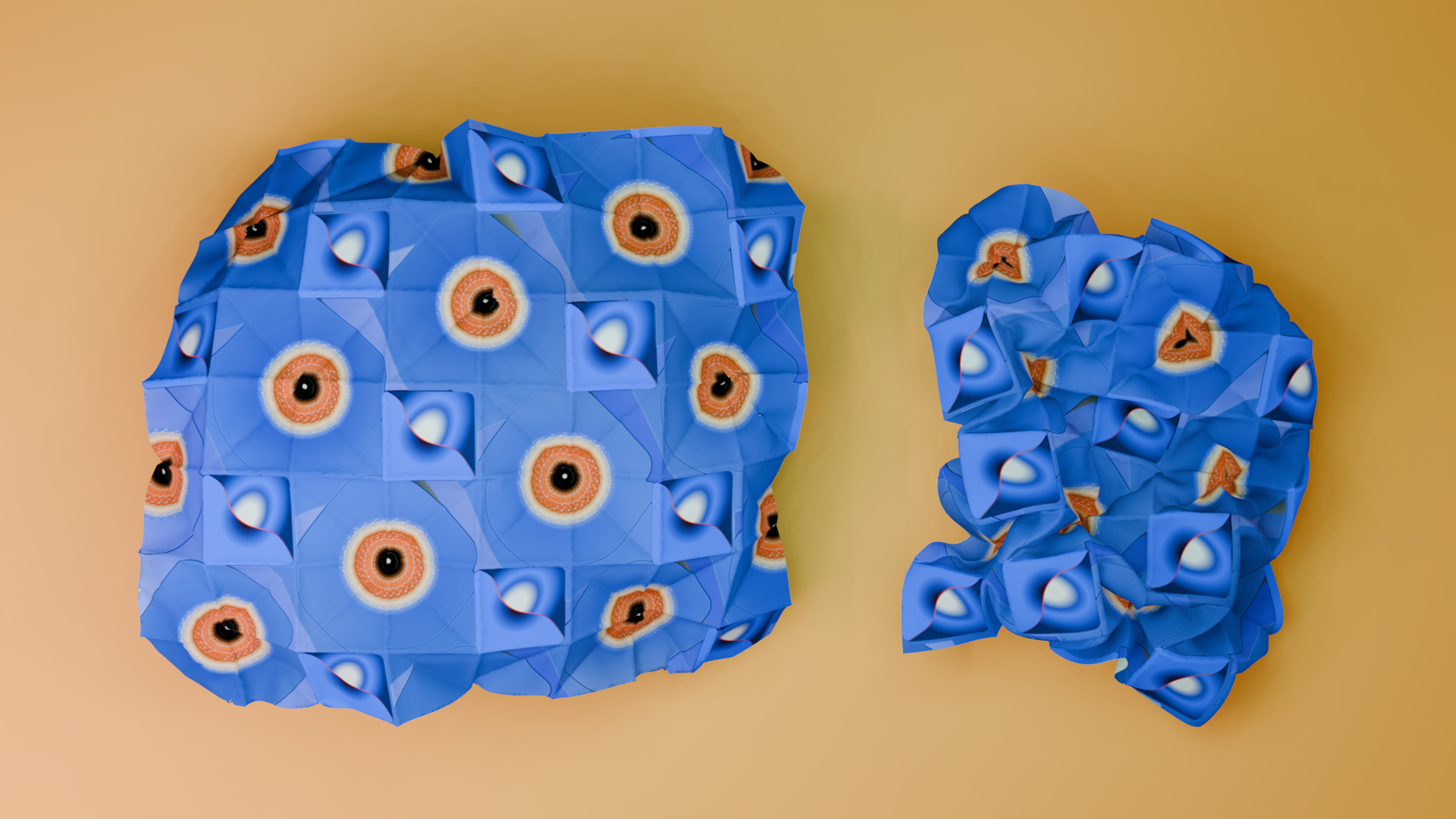
This piece responds to the phenomenon of camouflage. In nature, animals adapt their surface patterns to blend into their environment for concealment or to display warning signals to potential predators. This phenomenon is far more complex than it appears—it also functions as a social behavior, where patterns are used to express emotion, communicate across species, and signal state or intent. Beneath these visual effects lies a rich foundation of material science, involving chemistry, microstructure, and the physics of light interaction.
In this research project, I explore the design of a fabric prototype that reacts to external stimuli—such as light, heat, sound, or even human emotional input—and physically actuates to reveal patterns hidden within its folded structure. This fabric imagines a future material that can communicate emotional states, signal danger, or express identity through transformation, functioning as both a sensory interface and a new expressive medium.
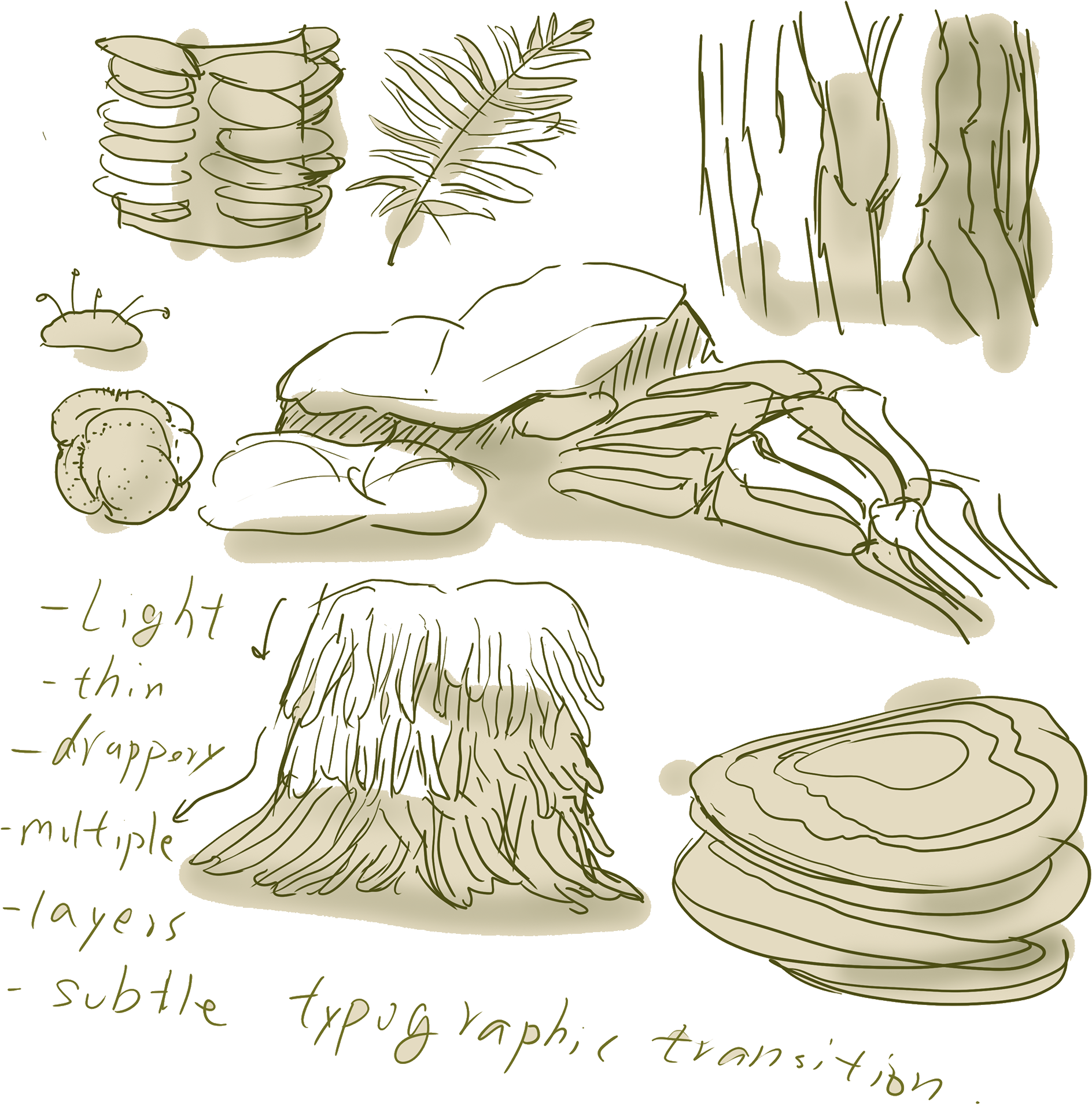
I first looked into plant structures that could be incorporated into fabric. Many leaves respond to touch, light, and other stimuli, adjusting their form to absorb more sunlight or enhance survival.
I want to recreate this motion. The movement is inspired by the touch-me-not plant: it appears simple, but behaves like origami—folding and expanding in response to stimulation.
Yet the challenge lies in how to engineer a material that can be actuated while still maintaining the essential properties of fabric—flexibility, softness, and wearability. Is it possible to create motion without relying on complex electrical circuits or embedded electronics?
My solution is to use an origami-based structure combined with temperature-responsive fabric. The origami geometry enables controlled transformation, while the material reacts to changes in temperature. As temperature rises, the structure unfolds through thermal expansion or shape-memory behavior; when the temperature drops, the fabric’s elasticity allows it to fold back into its original form ( heat-induced expansion and cold-induced contraction).
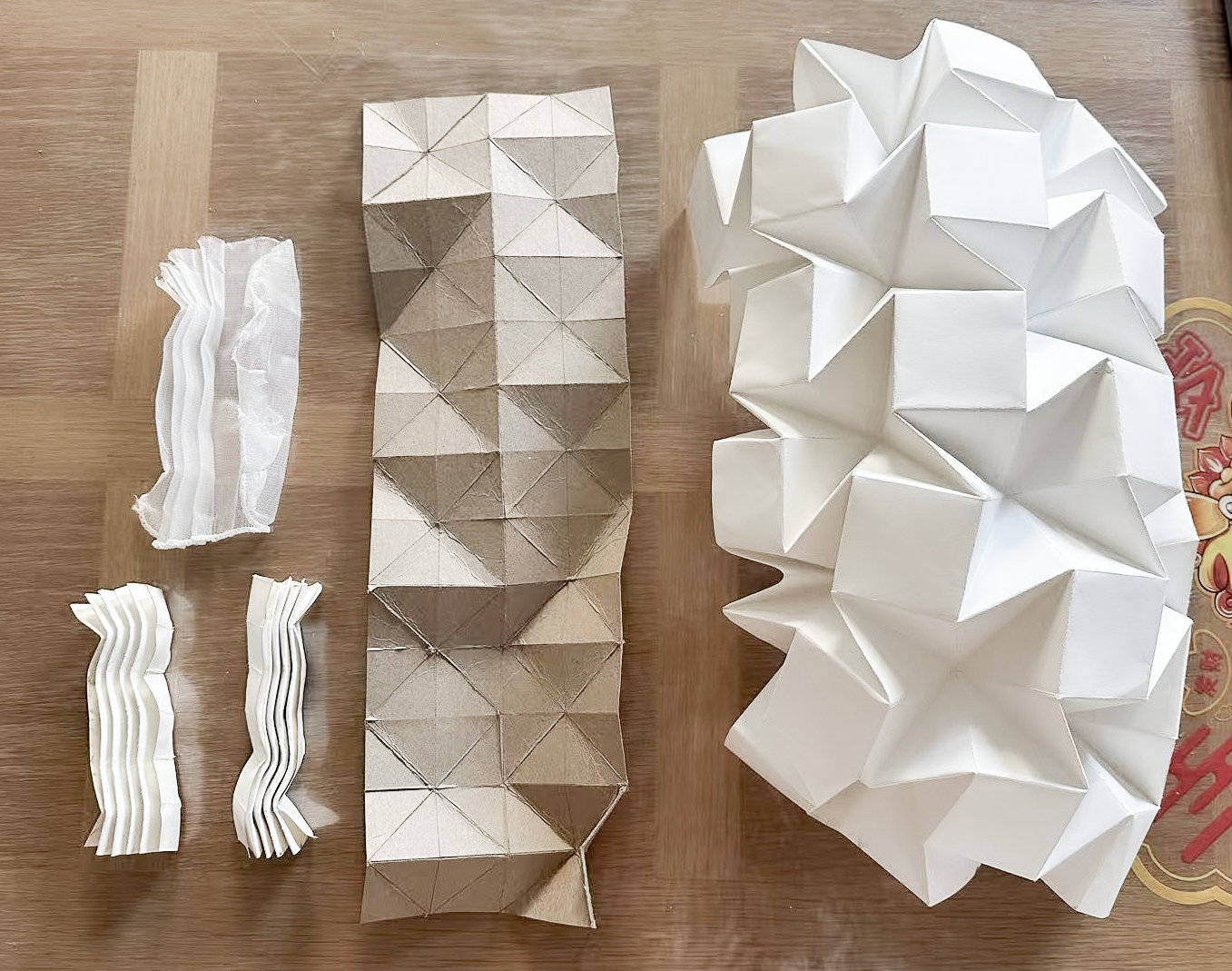
Paper study
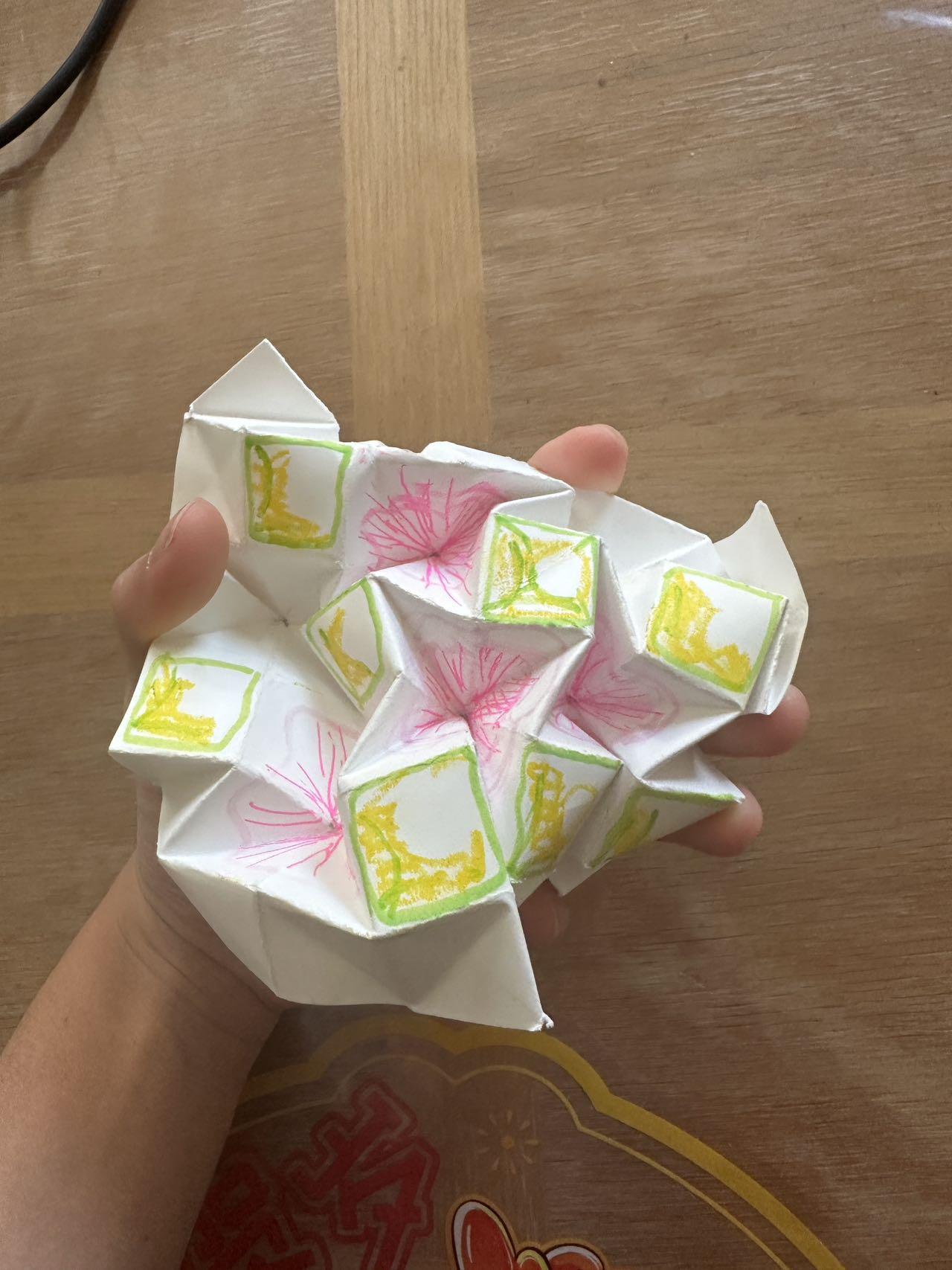
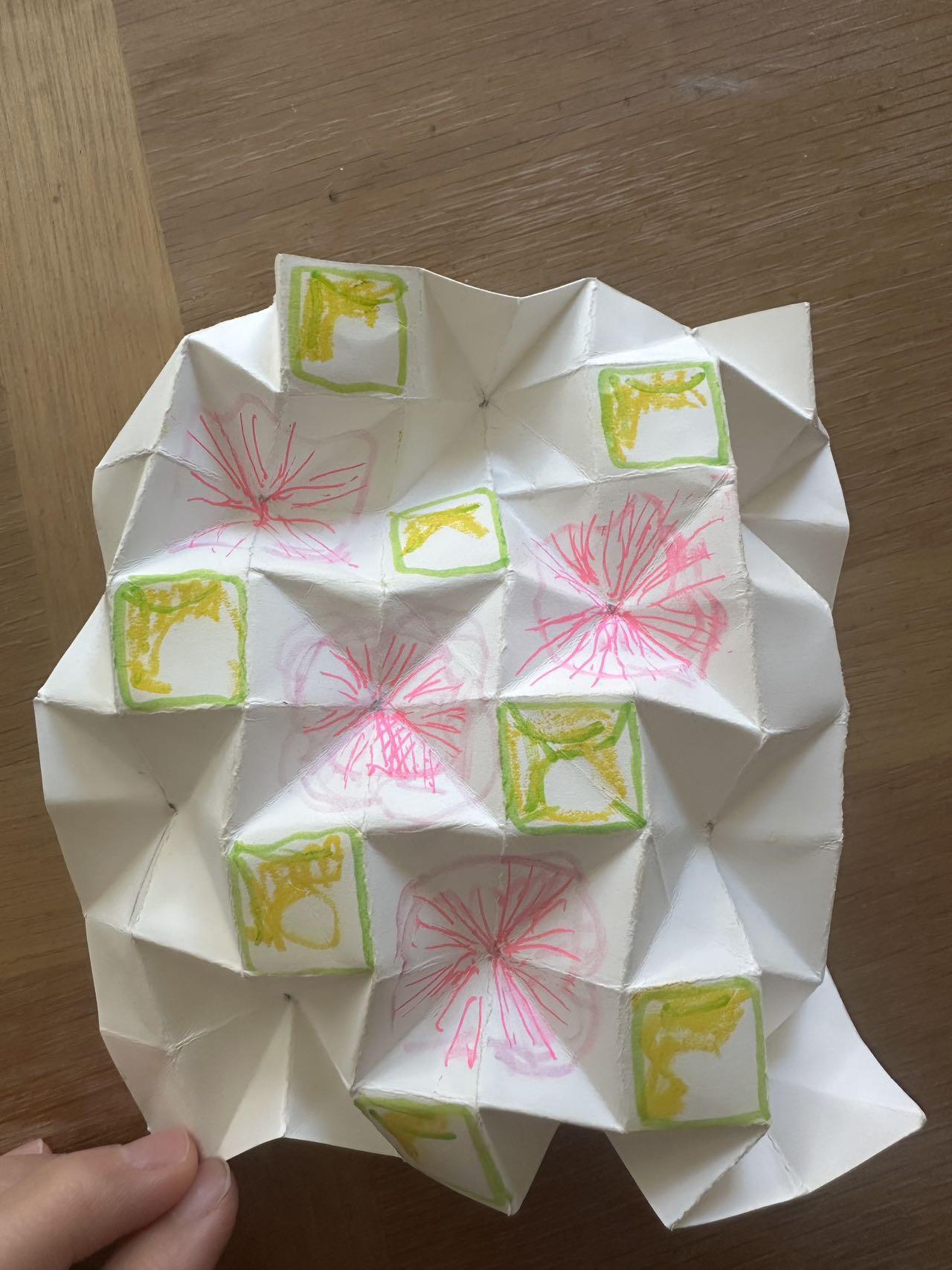
I then researched fabrics that can be shaped through heat. Organza—a lightweight synthetic fabric—stood out for its elasticity and heat-forming capability, especially when compared to natural fibers like cotton or hemp, which are stiffer and require much higher temperatures to permanently retain form.
I experimented with the material by clamping organza over a paper origami template and placing it in an oven at 350°F for 20 minutes. The heat-set process allowed the fabric to retain the origami geometry after cooling. The final result successfully held the folded structure while remaining compliant, enabling smooth transitions between the folded (compressed) form and the expanded form.
Because continuing physical prototyping would require better facilities (organza is not safe to heat-set in a home oven), I decided to complete this concept using digital tools. I learned CLO 3D, an apparel simulation software, where I customized fabric properties and animated how the fabric would respond to different stimuli, allowing me to test actuation behavior and material logic without physical risk.
.png)
This fabric behaves like a soft, silk-like material, but it does not fully fold.
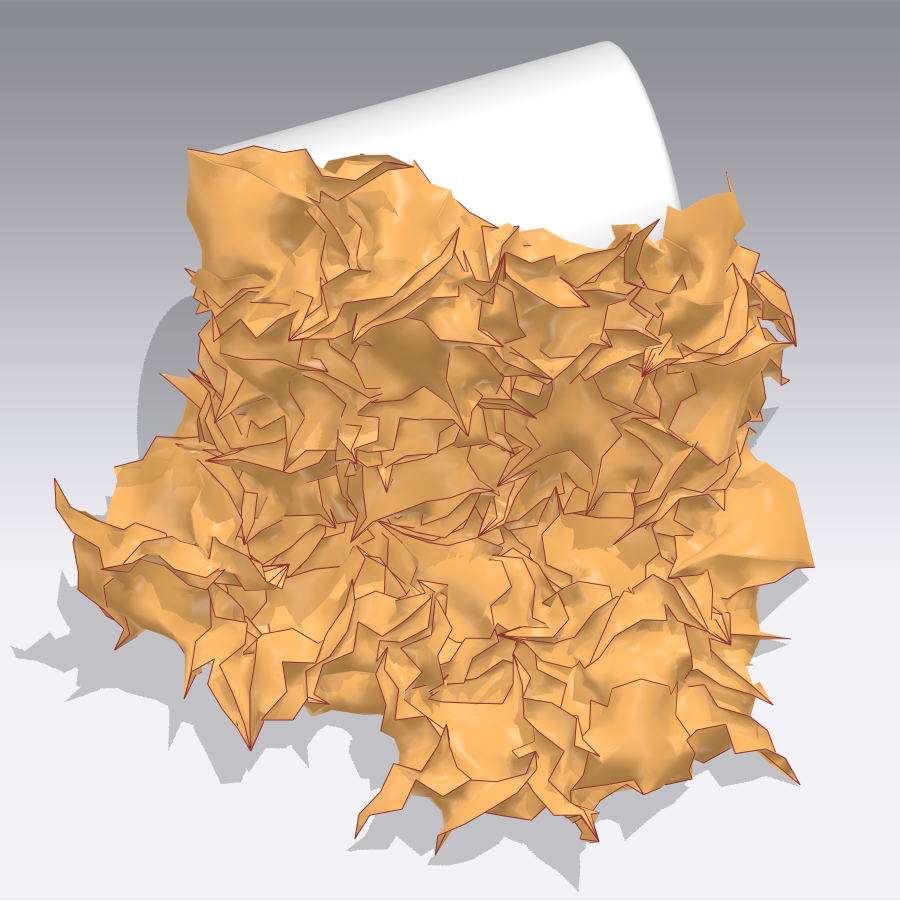
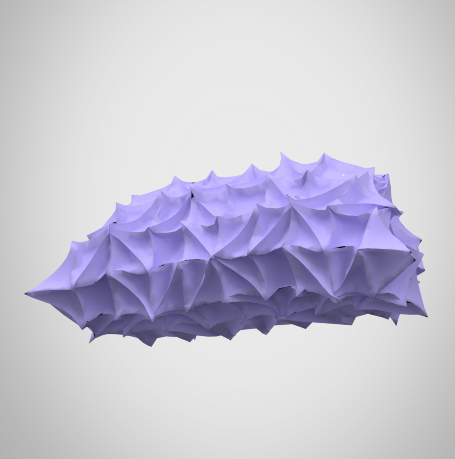
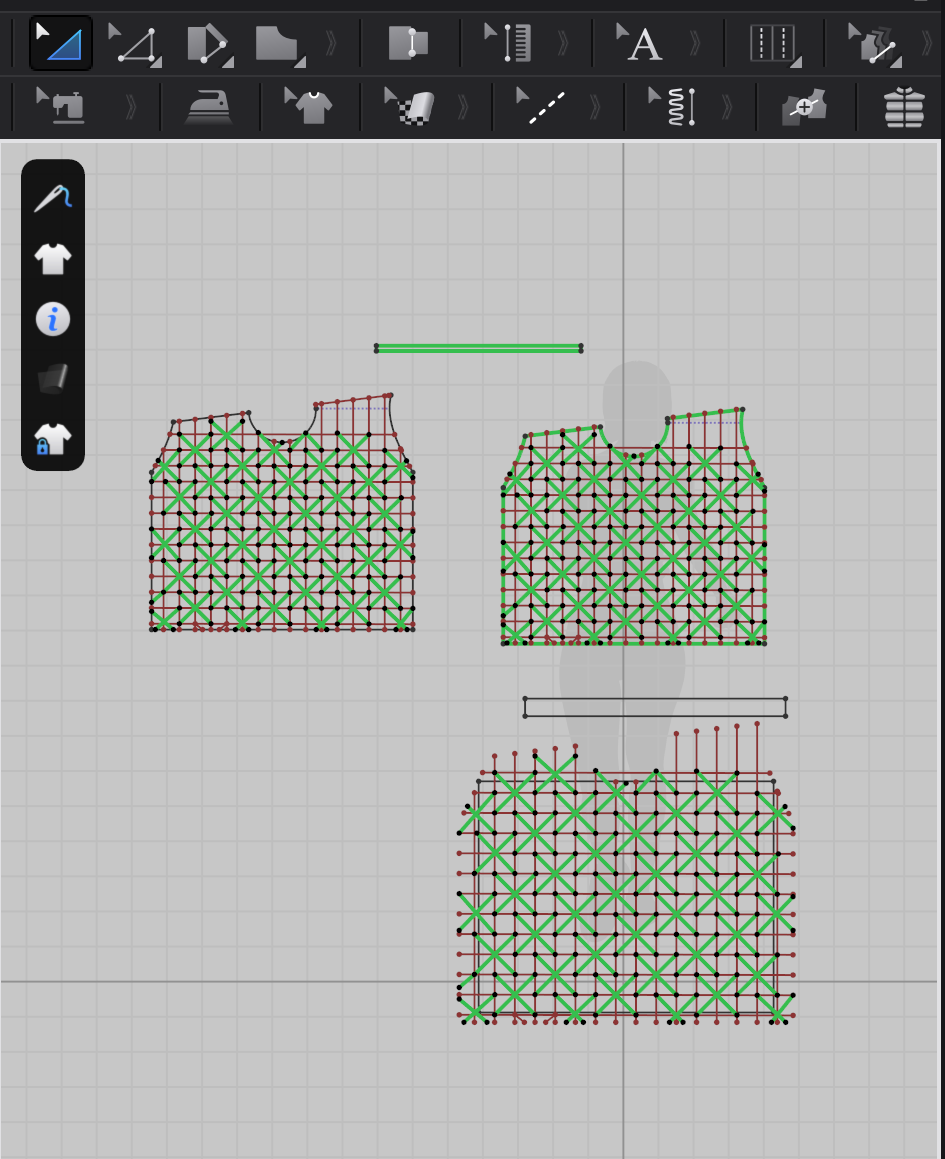
I created an animation demonstrating how the fabric would behave and respond to stimuli.

