With recent advances in bioengineering, I am excited by the possibilities of synthetic biology, genetic editing, and the use of AI to assist in discovering or simulating new forms of life. However, these technologies also raise critical questions about risk, ethics, and transparency. Is there knowledge hidden from the public due to the growing gap between research institutions and general understanding?
Through this project, I explored the use of AI tools—Invoke AI, Replicate, and Runway—to generate speculative visualizations of plankton evolution. By simulating evolutionary processes through image-based AI models, the project examines how current AI systems interpret biological complexity and what this reveals about the limitations and risks of AI-driven biological speculation.

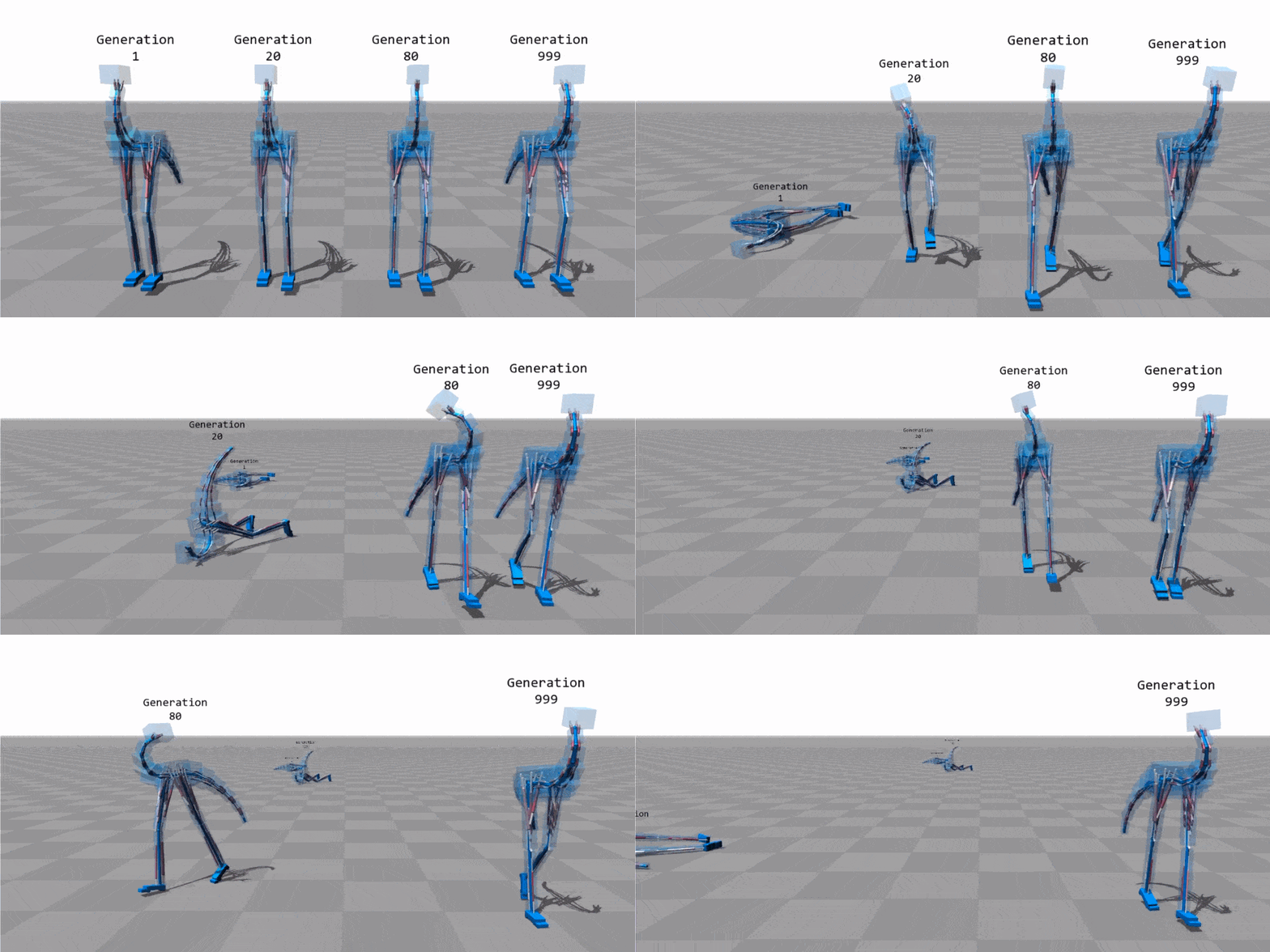
I have been deeply interested in evolutionary algorithms and their historical application in computer science. Researchers have long explored AI-driven evolution—for example, training agents to walk or adapt using simulated environments in video games or physics engines. These systems rely on externally defined variables, fitness functions, and selection pressures.This approach resembles a “designer-controlled world,” where evolution is not emergent but guided by human-defined rules. It raises questions about authorship, control, and the so-called “code of creation”—who defines the environment, the constraints, and the criteria for success in survival.
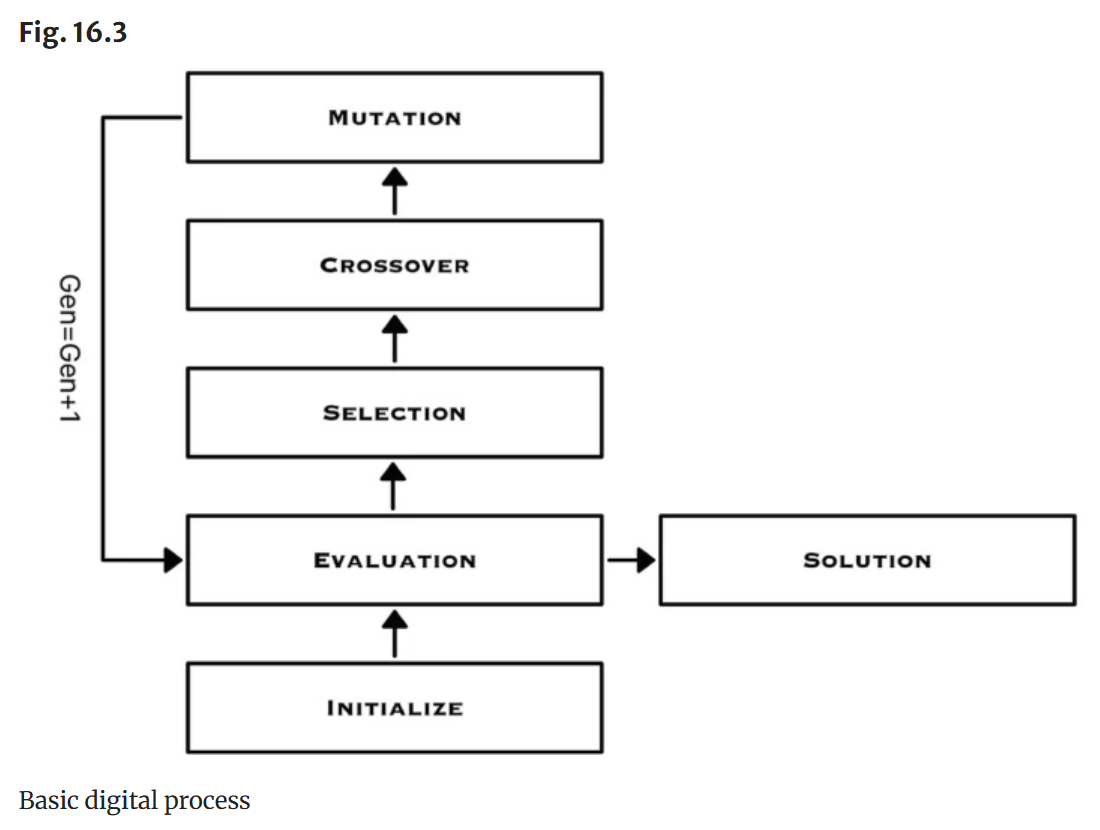
Compared to exploitative algorithms that optimize toward a known target, Evolutionary Algorithms (EAs) tend to generate unexpected, over-specialized, redundant, or even fragile forms. Rather than converging on a single optimal solution, EAs explore a broader design space through variation and selection, often producing structures that are viable without being efficient or generalizable. This exploratory capacity addresses classes of problems where purely exploitative or deterministic approaches struggle—particularly those characterized by high dimensionality, complex constraints, or incomplete knowledge.
As early computing pioneers such as Alan Turing and John von Neumann recognized, exploitative methods alone are insufficient for such problems, motivating computational approaches inspired by biological processes that deliberately leap into the unknown rather than refine only what is already known
Evolutionary Algorithms enable the simulation of life-like forms through computation and may eventually contribute to the generation of artificial life. This potential is both promising and disruptive, challenging existing definitions of life, agency, and ethics.
Data transparency is essential in this context. Decisions about what data is annotated, which features are selected, how fitness is defined, and who designs the system directly shape what can emerge as a result. Without clear boundaries, evolutionary systems risk unintended consequences such as cascading errors, misinterpretation of emergent behavior, and the amplification of bias. If EAs eventually become capable of generating forms of life, ethical frameworks must evolve alongside technical capability.
Plankton samples were collected from a rain puddle near the school, where recent rainfall created a dense concentration of microorganisms. The samples were observed under a microscope, and video footage capturing plankton movement and morphology was recorded.

Across successive generations, the plankton imagery became increasingly stylized and cartoon-like. Forms developed exaggerated outlines, darkened interiors, and visually “wicked” or alien characteristics. Over time, biological complexity diminished: three-dimensional structures collapsed into flattened, simplified two-dimensional silhouettes.

1. Lack of domain-specific data: Current generative image models are not trained on sufficiently accurate, high-resolution plankton morphology datasets, resulting in outputs that substitute biological structure with generalized visual patterns learned from unrelated image domains.
2. Algorithmic transformation without biological understanding: Image-based AI systems cannot model evolution as a physical, ecological, or morphological process; while transformations do occur across iterations, they are driven by internal optimization and stylistic convergence rather than the complex, multiscale mechanisms that govern living systems.
3. Power, access, and control over life-simulation systems: In theory, integrating authoritative scientific data—such as genetic information, biological constraints, and environmental parameters—could enable higher-fidelity simulations of life-like forms, but this raises critical questions about who controls access to such data, who decides what is selected or excluded, and who governs the variables shaping artificial evolution.