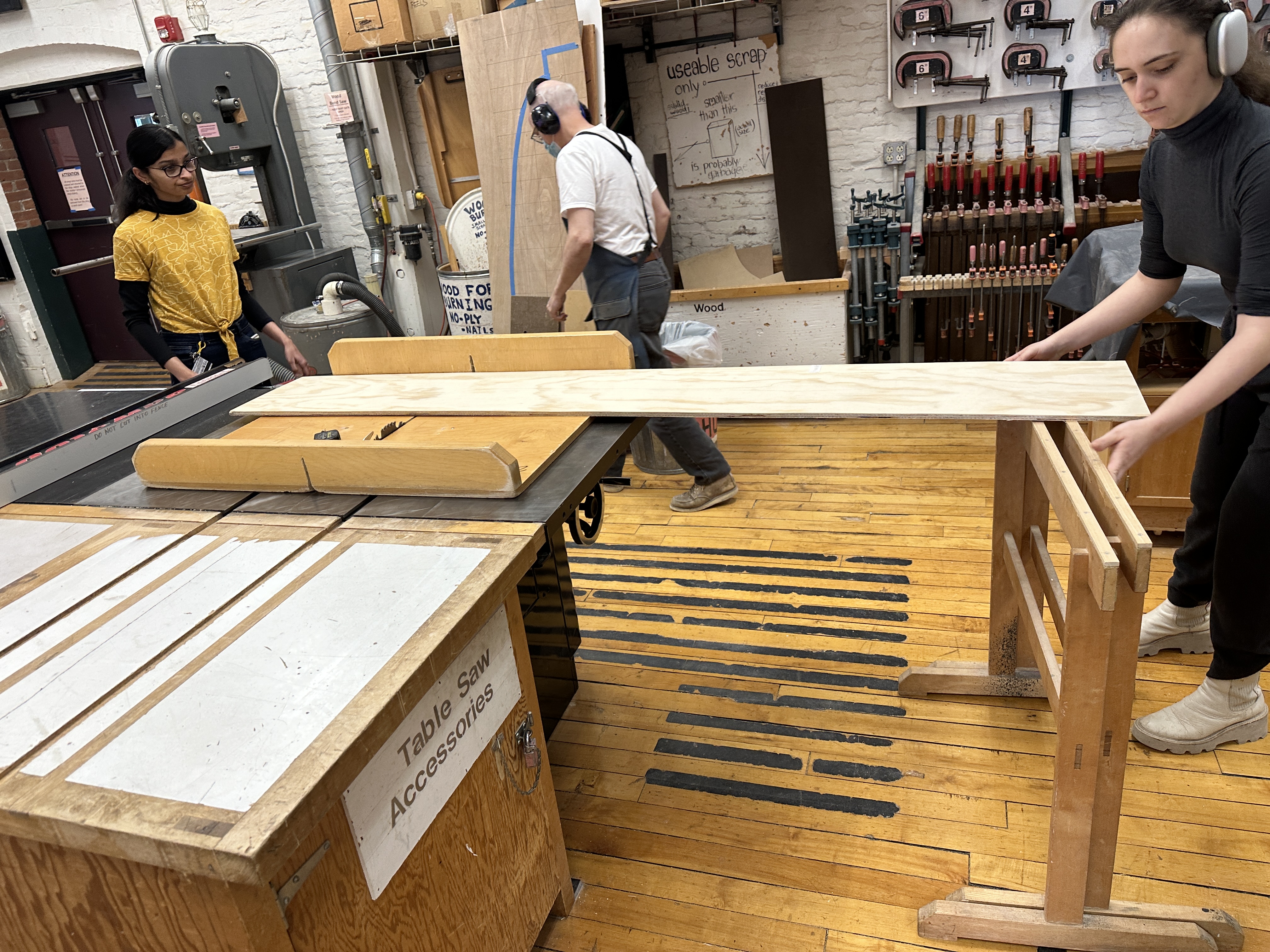
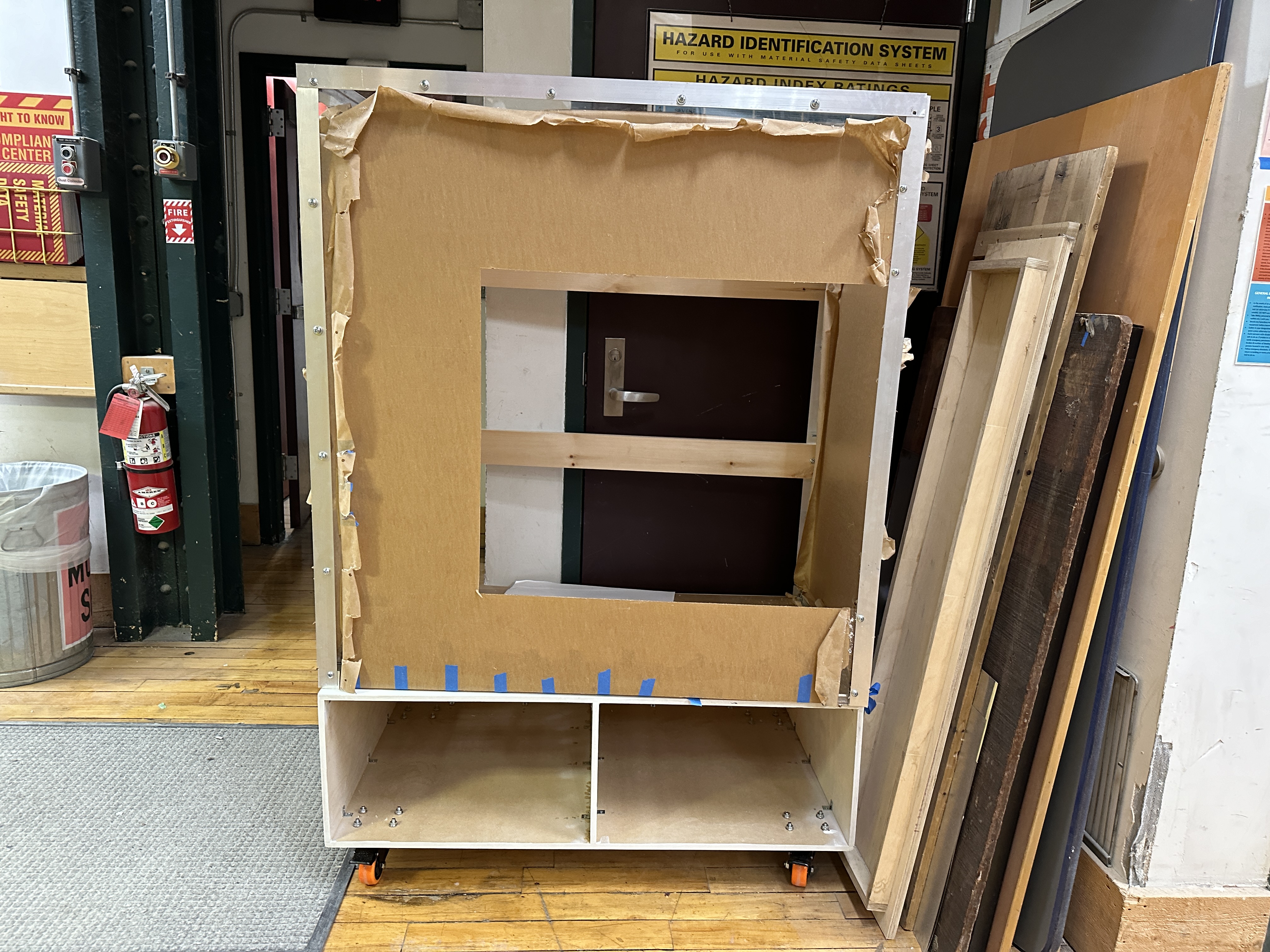
Built a 4-feet-height Tank

Collaborated Project with a Furniture Student to Build an Enclosure for Chameleons

This project was a collaboration with a furniture major student who shares the same interest in nature—especially building tanks for animals and plants to live in, also known as vivariums. We started the project with a simple idea: my current pets, two chameleons, needed a larger home with greater plant diversity, better ventilation, more basking spots, and improved drainage. The goal was to create an enclosure that more closely resembles their native South African environment.

Exsisting chameleon enclosure setup.

Research in Habitat

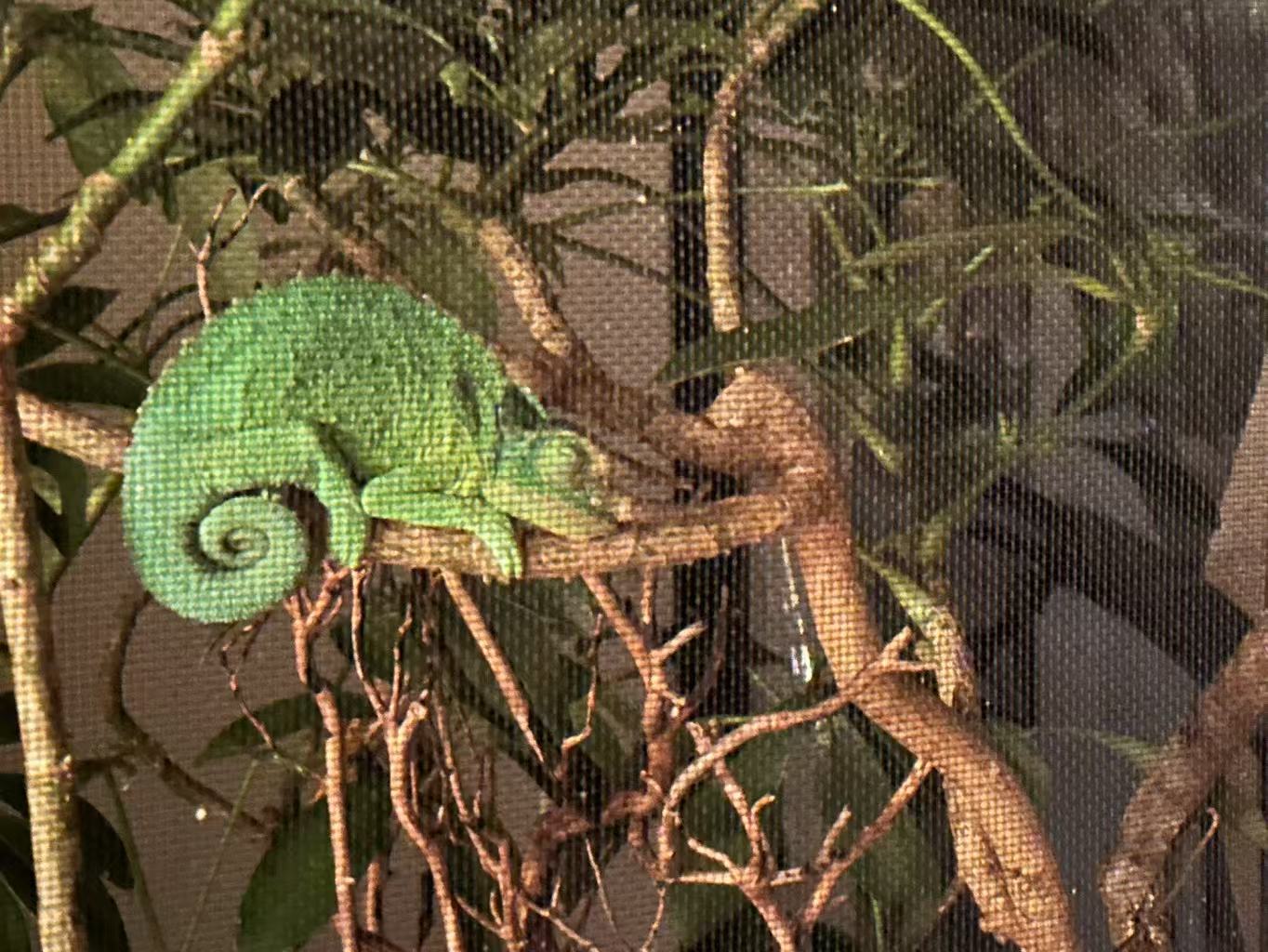
Jackson’s chameleon (Trioceros jacksonii) is a species known for the male’s three horns, used for defense and display. It is native to high-altitude tropical regions of East Africa, where the climate includes both dry and wet seasons. Daily weather shifts are significant: daytime temperatures range from 27–32 °C (81–90 °F), while nighttime temperatures can drop to 12–15 °C (54–59 °F). Understanding these environmental conditions is essential to keeping the animals healthy and thriving.
Planning

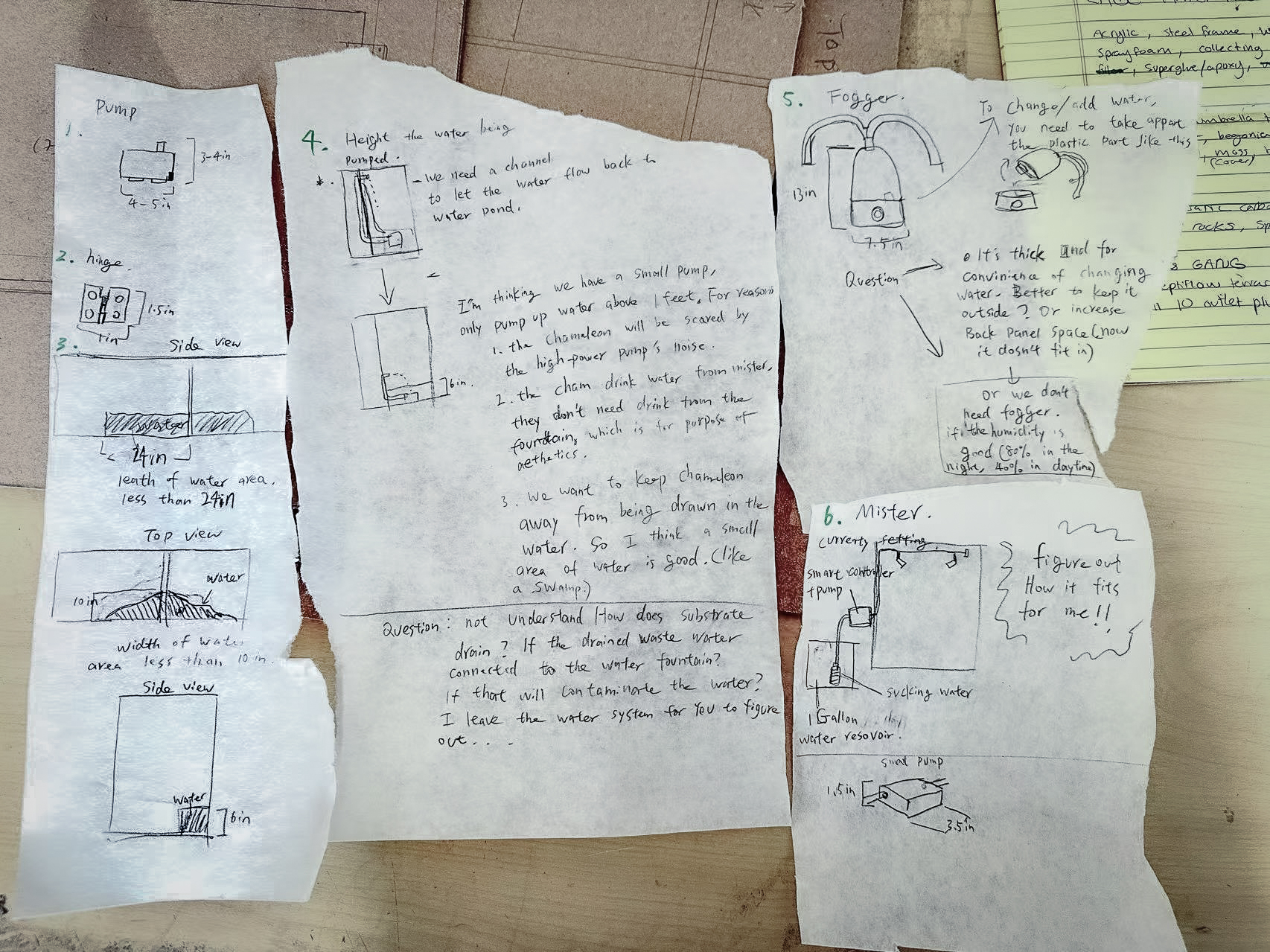
We researched online chameleon-keeper communities and studied habitat requirements in detail. Planning involved laying out all equipment—such as the mister system, LED lighting, water features, and substrate zones (dry land)—as well as selecting appropriate plants to support climbing and hiding behaviors for the "dwellers".

The source of our reference can be viewed here
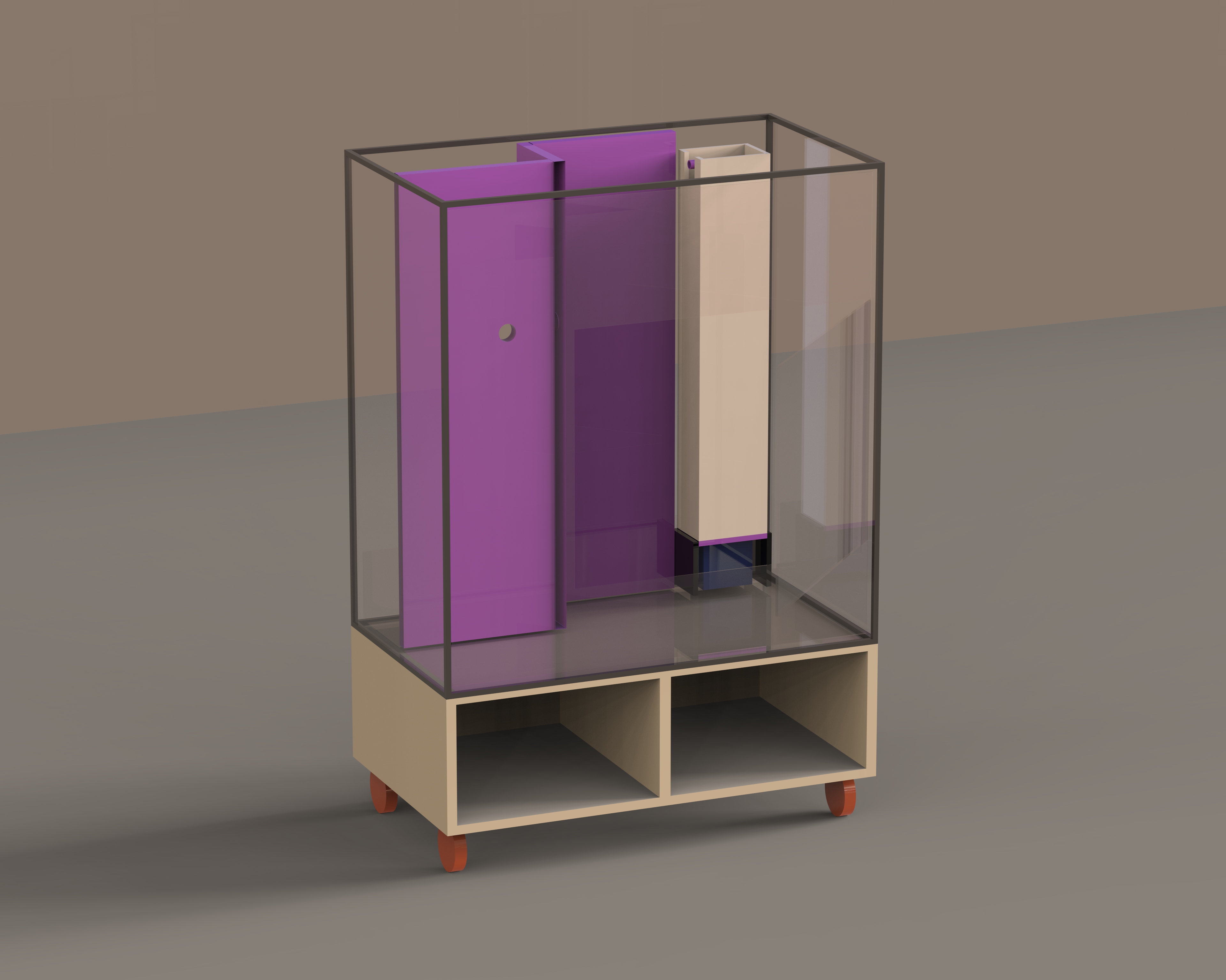
The overall dimension is 4 x 4 x 7.5 ft.

Quick Study

We used CAD to test whether our approach to integrating these systems into the vivarium design was feasible and realistic.

The Build

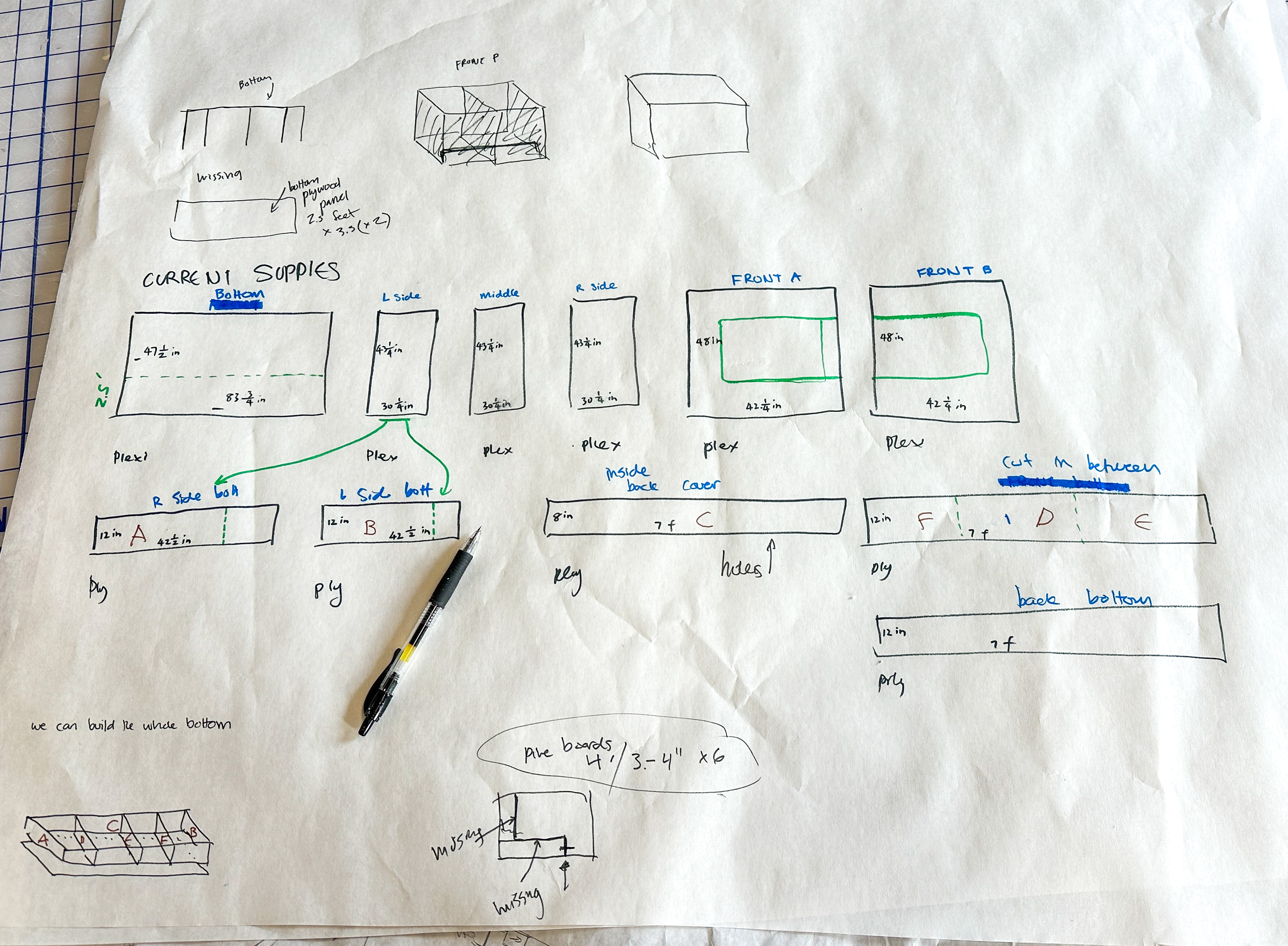
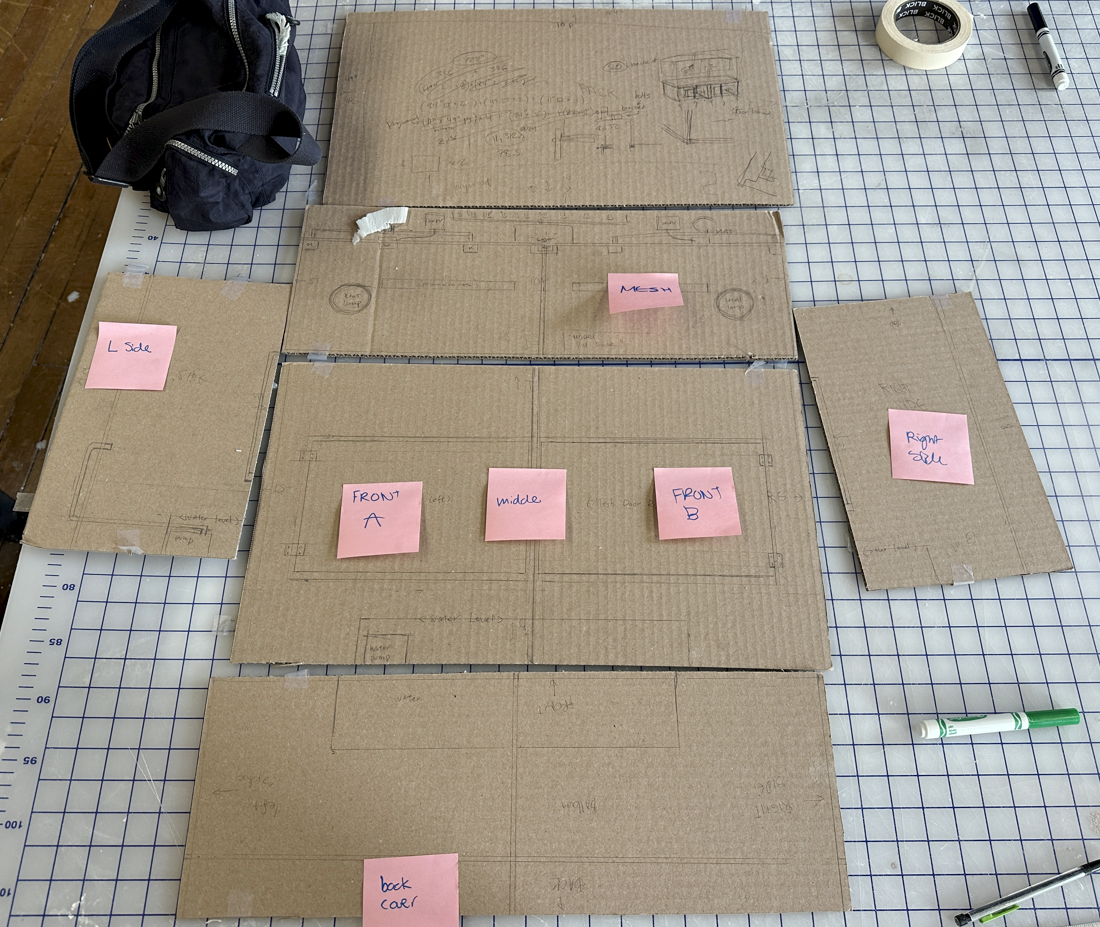
We used cardboard models to determine overall dimensions and to mark the position of each panel, including holes and hardware placement.

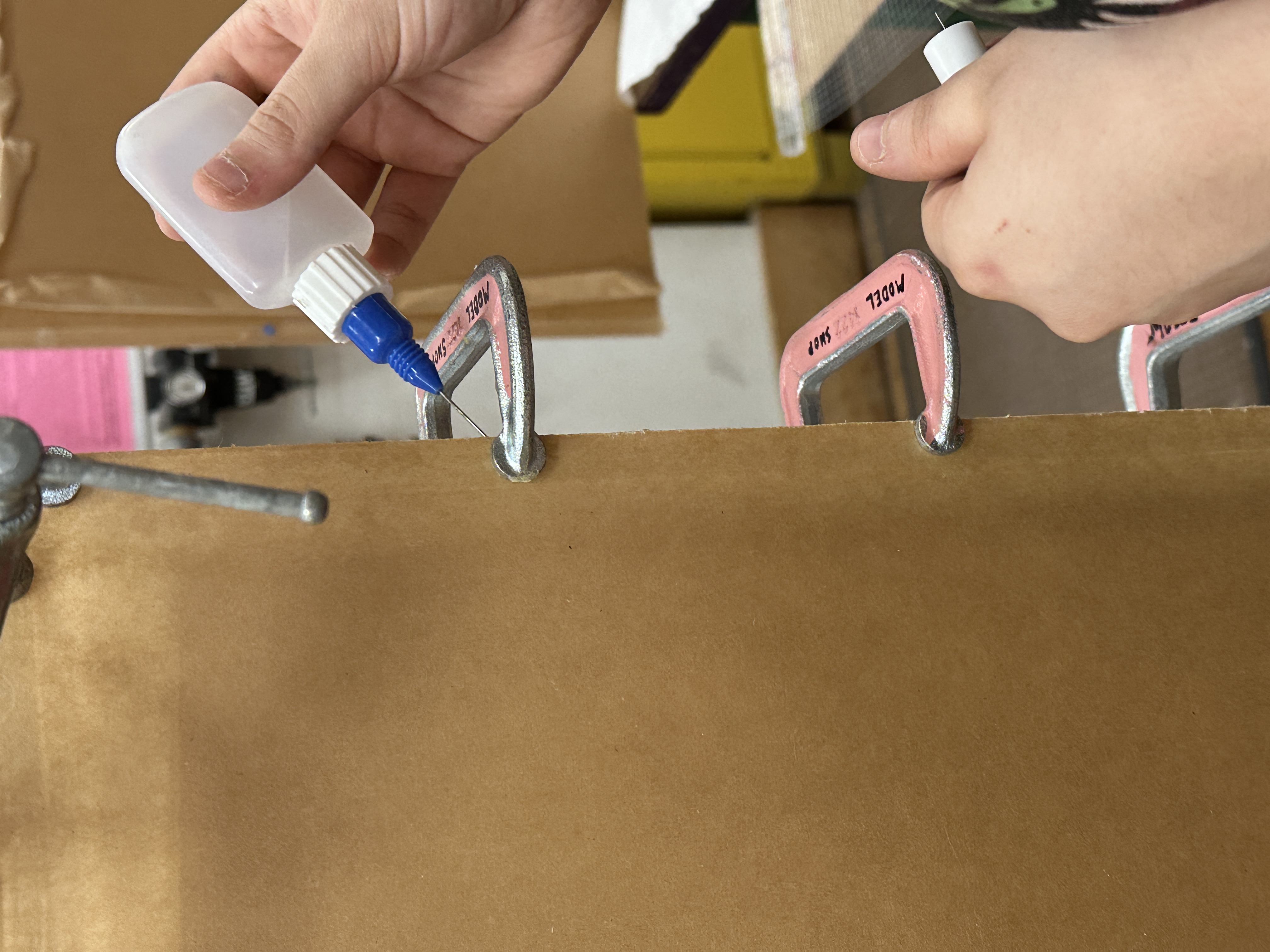
Acrylic was chosen as the primary construction material, which turned out to be the biggest mistake we made. While acrylic is inexpensive and easy to work with, it is flexible and not as rigid as glass. Due to its tendency to bend at this scale, we were unable to properly glue the panels together.To solve this issue, we drilled holes every 2.5 inches and used aluminum brackets along with nuts and bolts to mechanically fasten each acrylic panel together.

Result (indefinitely in progress)

This project turned out to be more ambitious than we expected—both of us were juggling heavy academic course loads, and the surprise challenge of correcting acrylic bending quickly consumed most of our time. In the end, we completed the exterior structure but didn’t make it to the interior ecosystem.Still, the process was full of lessons (and a fair amount of trial, error, and laughter). We learned to adapt, troubleshoot on the fly, and stay curious even when things didn’t go as planned. Most importantly, we didn’t give up. We brought the project as far as we could—and that persistence, more than any finished detail, is the lesson that stays and can be learned again and again.

My another vivarium project can be viewed here.
Taxidermy
Metal Fabrication
©FangzhuoTang 2025