
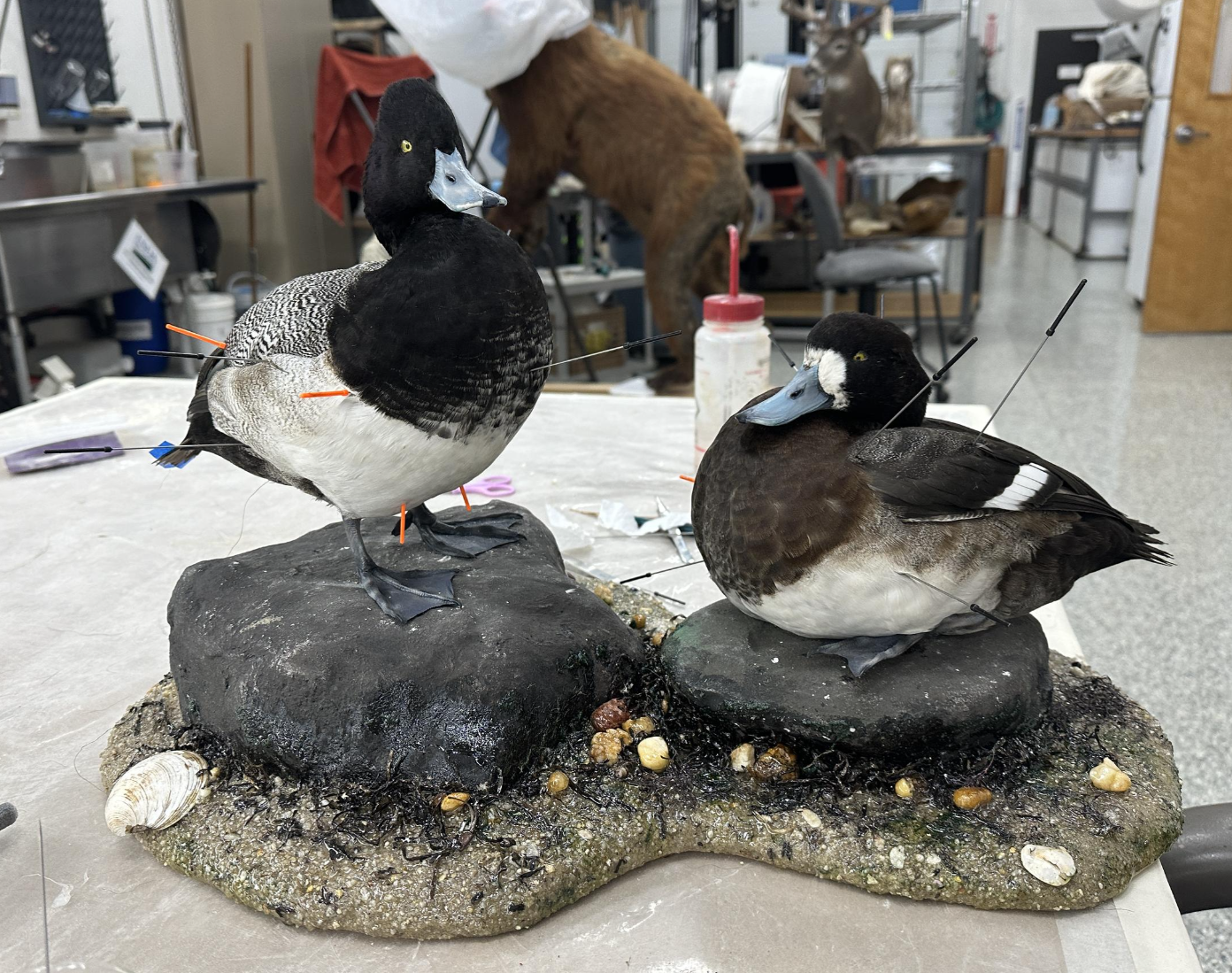
Manikins of two Greater Scaups
Mounted
What is the underlying mechanism of any form of life? This question has stayed with me since childhood—when I caught bugs, drew dinosaurs, and wondered what was inside them that made them move. What is a creature thinking? Does it think at all? That curiosity gradually carried forward through my self-driven learning of anatomy and evolutionary biology, sketching bones, and copying master drawings that study anatomy structure.
Eventually, I encountered taxidermy. I attended the Artistic School of Taxidermy in Idaho, followed by an internship at George Dante Studio, where I fully immersed myself in the practice. The work ranged from observing and measuring animal bodies, translating those dimensions into foam manikins, to skinning, tanning, and sewing hides—processes that, in many ways, resonate with prototype-making in design.
I see taxidermy as my lens for understanding material, structure, and the mechanisms behind the most complex system of life. It sharpens both my eyes and my hands, and redefines the boundary of “reassembly”—how much humans can copy nature through observation, knowledge, and the delicate manipulation of tools and materials.
My formal training began at the taxidermy studio in Idaho, where I learned to mount a lynx, a sandhill crane, a merganser, a black bear, and a kudu.
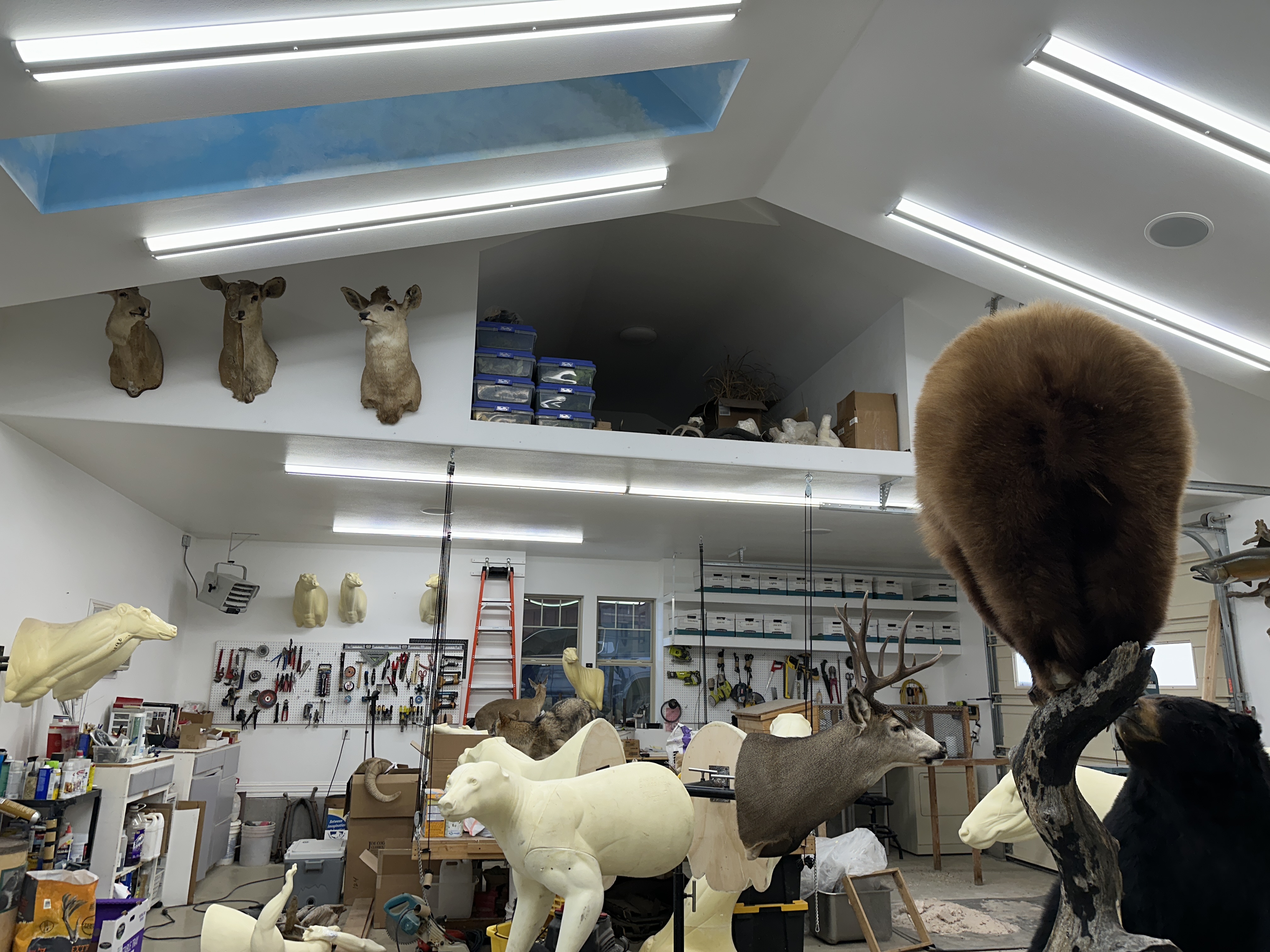
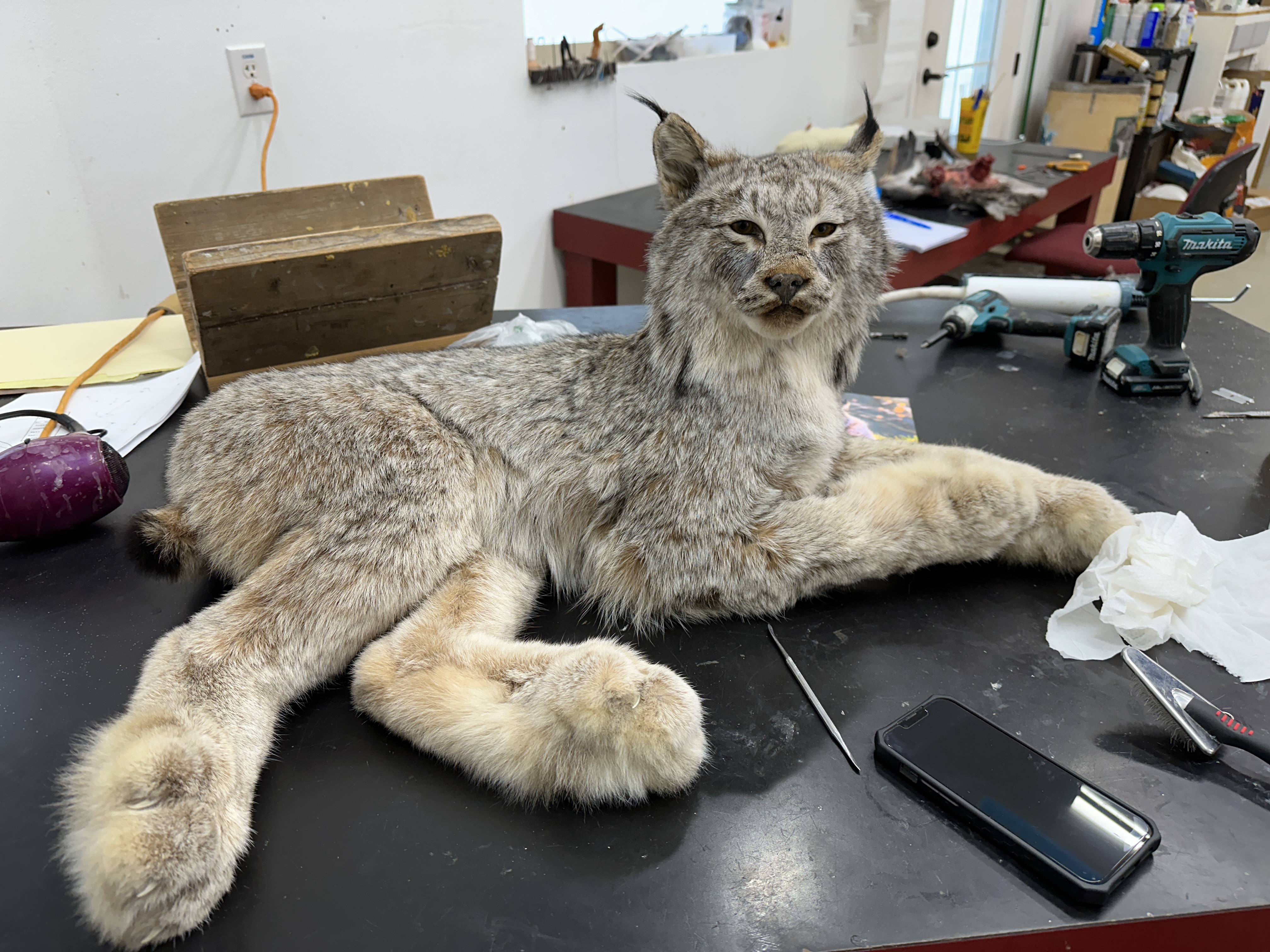
If you’re still wondering how this specialized craft is relevant to design: what I’ve learned is that it follows a rigorous, process-driven workflow where every step is rooted in problem-solving. It involves choosing the right tools to dismantle, repair, and fine-tune; testing different materials to achieve greater realism while keeping cost in mind; and constantly reflecting on how to iterate the mounting process—adding or subtracting from it—to create the illusion of a living animal from a lifeless body.
As I continued exploring this practice, I connected with one of the coolest people I’ve ever met—George Dante, who has been practicing taxidermy since a young age and now running a studio in NJ serving musuems and private clients. I worked at his studio over the summer, where I learned not only technical skills but also gained insight into the museum fabrication industry. This experience was invaluable in helping me better understand the role of taxidermy and fabrication within a contemporary cultural and professional context.
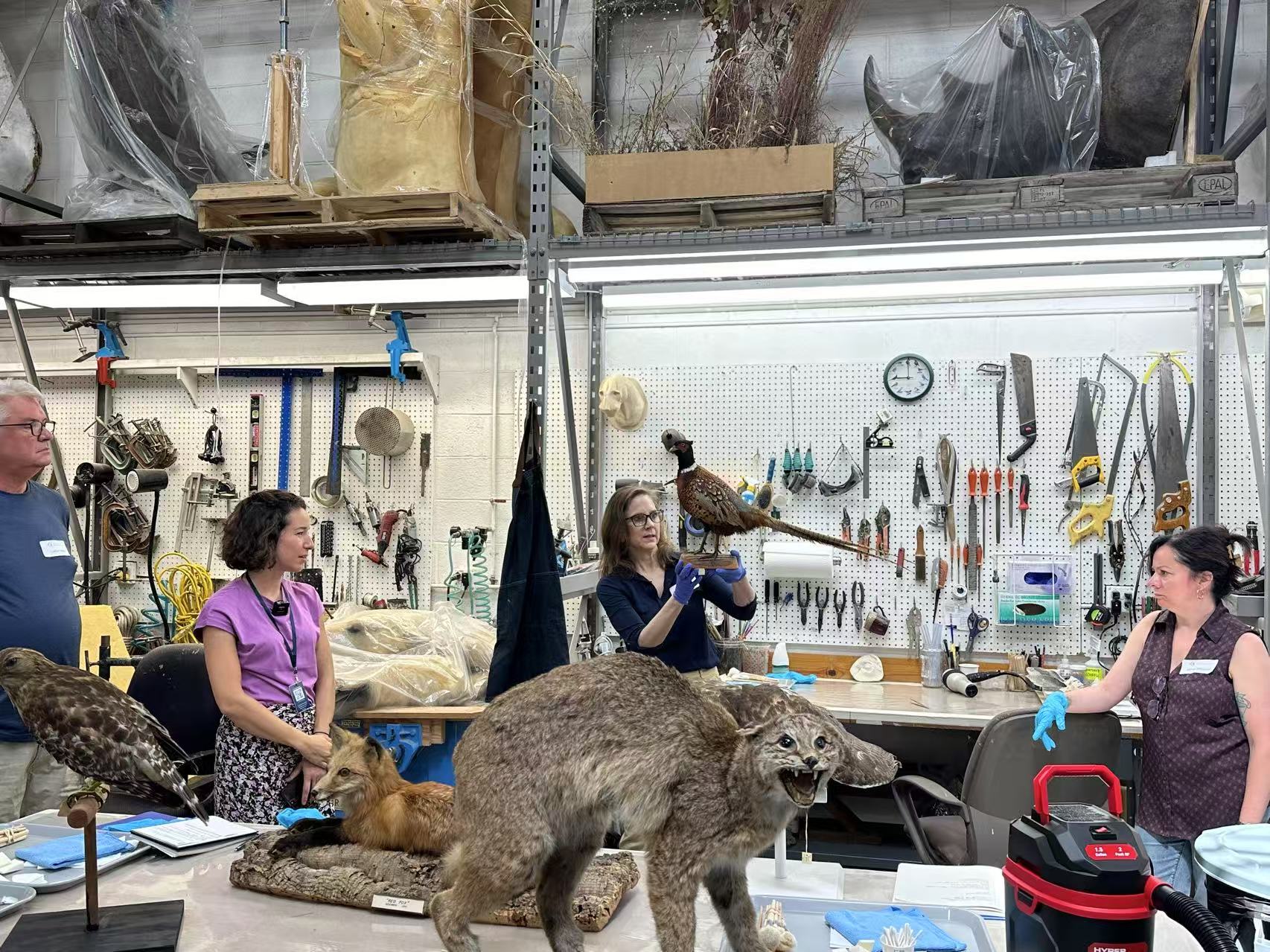
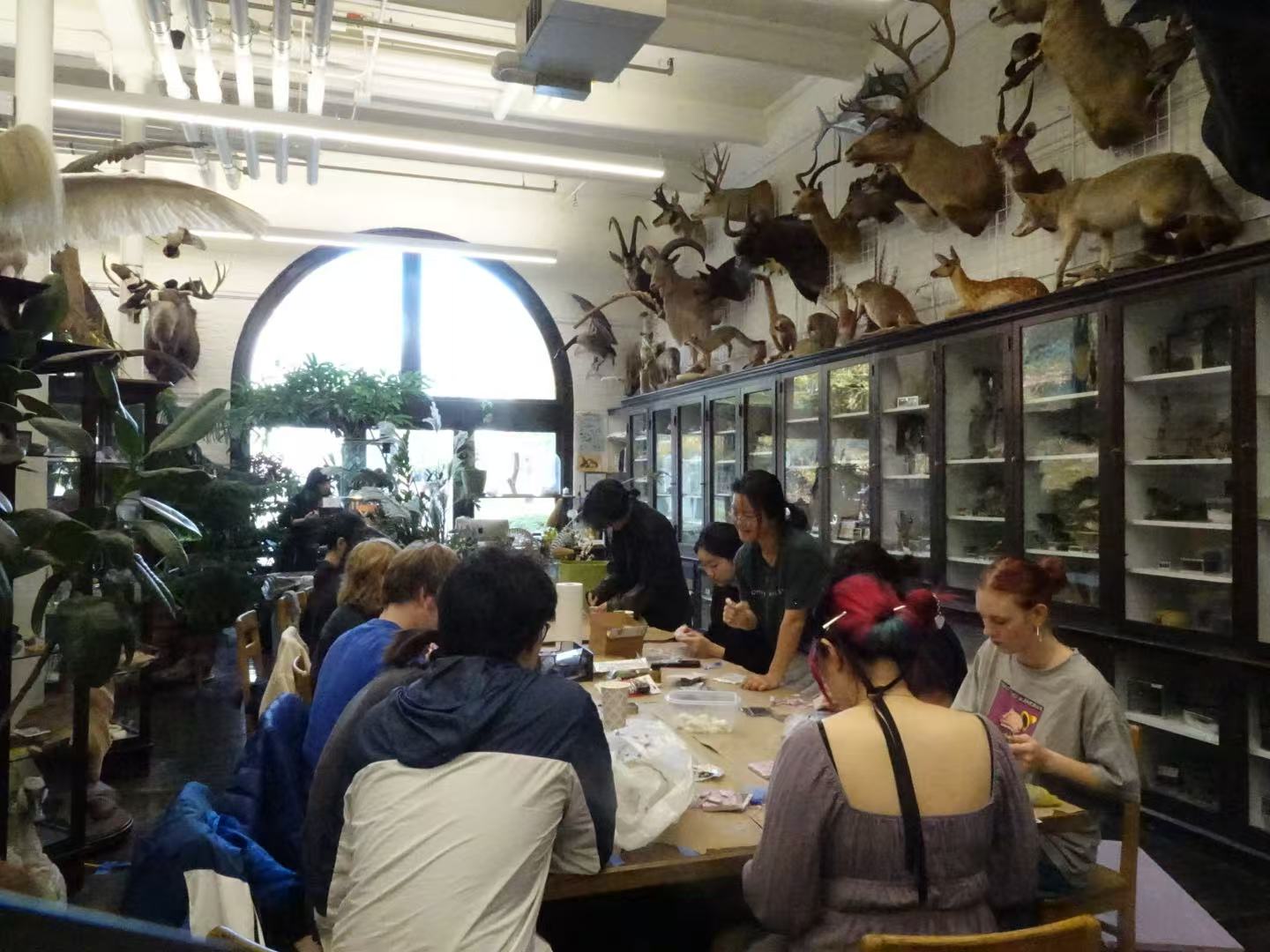
I have been seeking people with a similar mindset—curious about life, nature, and history. I founded the RISD Taxidermy Club and organized workshops, lectures, and events for students. We collaborate with the RISD Nature Lab, biologists, taxidermists, and natural history institutions such as the American Museum of Natural History and the Museum of Natural History and Planetarium in Rhode Island to bring this community together.
Many people ask me what I would choose between taxidermy (art) and my industrial design career, as if I have to make a single choice between the two. Yet through years of exploring both fields, I’ve realized that I don’t need to separate them. Instead, I carry the philosophy of both and combine them into a way of working through problems differently. My interests span design, engineering, art, and biology, but they all condense into one core pursuit: studying how things work, and how existing methods can be used to emulate and simulate those mechanisms.